Visiting Barcelona Cathedral
Barcelona Cathedral rewards a little planning before a visit. The sections below cover opening hours, mass times, transport, dress rules, and the areas open to visitors inside.
Information about your visit to Barcelona Cathedral
Barcelona Cathedral, the Gothic-style cathedral in Barcelona's Gothic Quarter (Barri Gòtic), stands in the old city and admits tourist visits throughout the year. The notes below help travelers plan a visit to Barcelona Cathedral: hours, access, dress rules, and the main highlights.
The logistics of a Barcelona Cathedral visit cover opening hours, mass times, transport, timing, access, dress, and parking. The essentials sit in one list below:
- When is Barcelona Cathedral open to visitors? The cathedral admits tourist visits Monday to Friday from 09:30 to 18:30, with last admission at 17:45. Saturday access runs from 09:30 to 17:15, and Sunday access from 14:00 to 17:00, both closing to new visitors at 16:30.
- When are mass and prayer services held? Daily services fill the Chapel of the Holy Sacrament and the High Altar, held in Catalan and Spanish. Weekday masses fall at 09:00, 11:00, 12:00, and 19:15, plus a 10:00 service that pauses in July and August. Sundays and public holidays add High Altar masses at 09:00, 10:30, 12:00, 13:00, 18:00, and 19:15.
- How do visitors get to the cathedral? The cathedral sits in the Gothic Quarter, a 3-minute walk from Jaume I metro station on Line 4, with Liceu (Line 3) and Urquinaona (Lines 1 and 4) close by. Bus lines 47, 120, V15, V17, N8, and N28 stop along Via Laietana, and Plaça de Catalunya lies about 10 minutes away on foot.
- When is the best time to visit? Weekday mornings from 09:30 meet the smallest crowds, and April, May, June, September, and October stay calmer than peak summer. Foot traffic peaks between 12:00 and 14:00.
- How long does a visit take? A full tour of the nave, crypt, choir, cloister, and rooftop takes 1.5 to 2 hours.
- Is Barcelona Cathedral accessible? A no-step entrance on Carrer del Bisbe leads into the cloister, and an elevator reaches the rooftops, though the crypt keeps some architectural limitations.
- What should visitors wear? Shoulders and knees must stay covered, and stable closed shoes suit the historic stone floors. Large bags and suitcases cannot enter, and no cloakroom operates on site.
- Where can visitors park nearby? Underground car parks near Avinguda de la Catedral and Plaça Nova hold private vehicles, since most streets in the Gothic Quarter are closed to cars.
Explore whatever you need in detail
Dedicated pages break down each part of a Barcelona Cathedral visit, covering the questions travelers ask most before arriving.
Tickets and general information
The venue hub lists entry options for the Gothic temple, the cloister, the choir, and the rooftop terraces, alongside practical visitor details.
Opening hours
Tourist visiting hours shift between weekdays, Saturday, and Sunday, and each day sets its own last admission time before the doors close to new arrivals.
How to get there
Metro, bus, train, and walking routes all reach the Gothic Quarter address from central Barcelona, with the nearest metro station only a few minutes away.
Dress code
Staff at the entrance apply a dress code that requires covered shoulders and knees, and they turn away visitors who arrive underdressed.
Barcelona Cathedral vs Sagrada Familia
Travelers choosing between the two best known churches in Barcelona can weigh their architecture, visiting times, and what each one offers before deciding.
Where is the Barcelona Cathedral located?
Where is the Barcelona Cathedral located?
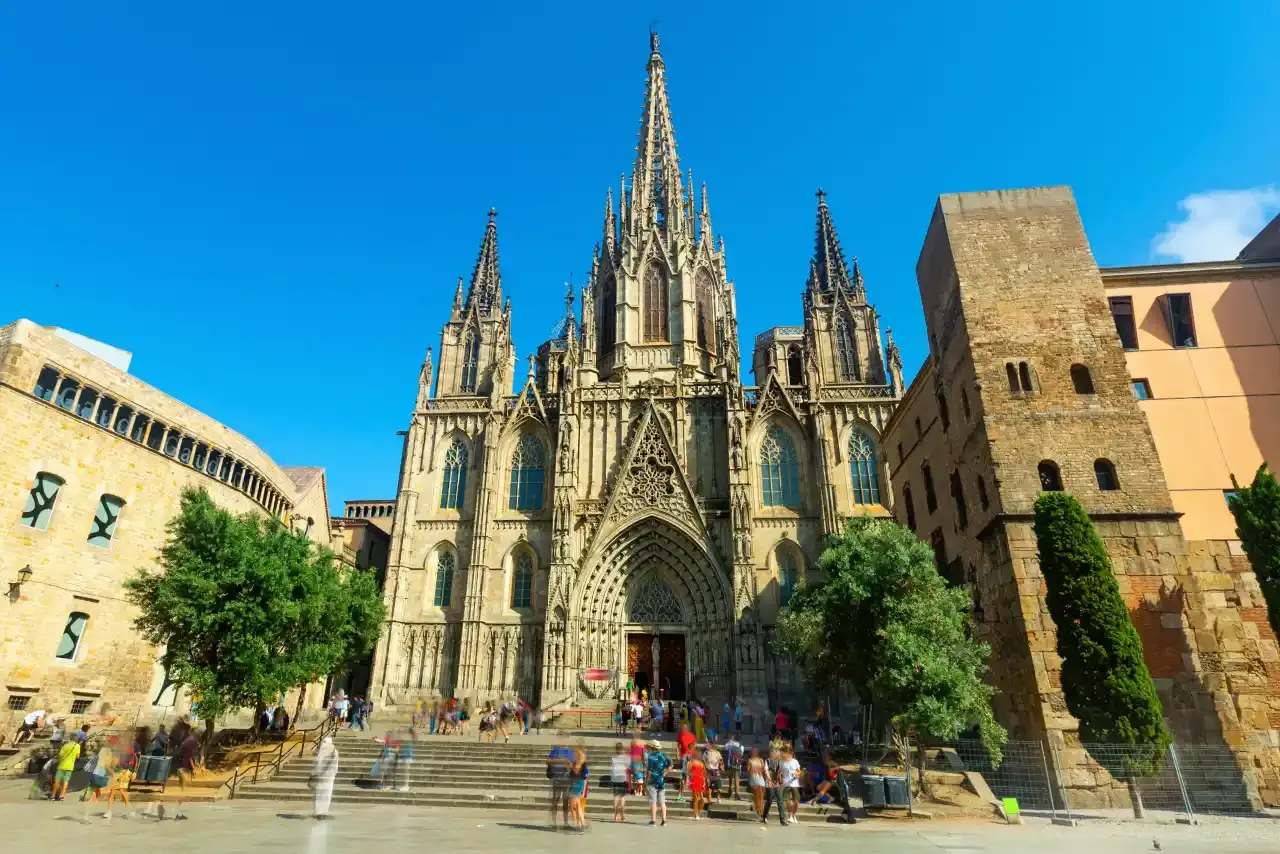
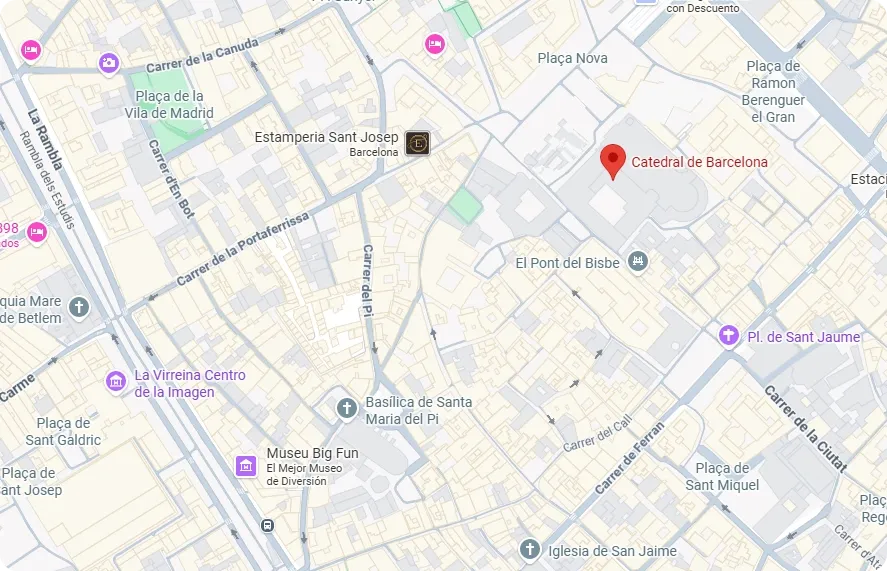
Barcelona Cathedral stands in the Gothic Quarter (Barri Gòtic) at Pla de la Seu, s/n, 08002 Barcelona, Spain. The cathedral fronts a square named after the historic episcopal see and shares that setting with the Casa de l'Ardiaca (Archdeacon's House) and the Palau Episcopal (Bishop's Palace). A short walk away, Plaça Sant Jaume holds Barcelona's City Hall and the Palau de la Generalitat. The site sits within a few minutes' walk of the Jaume I metro stop, and the mostly pedestrian Gothic Quarter lets visitors reach it on foot from across the old city center.
Book your ticket to Barcelona Cathedral
What to see at Barcelona Cathedral
Barcelona Cathedral opens five main areas to visitors on a standard ticket: the central nave, the crypt of Saint Eulalia, the choir, the cloister, and the rooftop. The nave is the main Gothic space inside the Barcelona Cathedral, lined with side chapels and centuries of stained glass, while the shaded cloister garden is known for the white geese beside its fountain. The choir holds carved wooden stalls at the center of the church, and an elevator lifts visitors to the rooftop for a view across the Gothic Quarter.
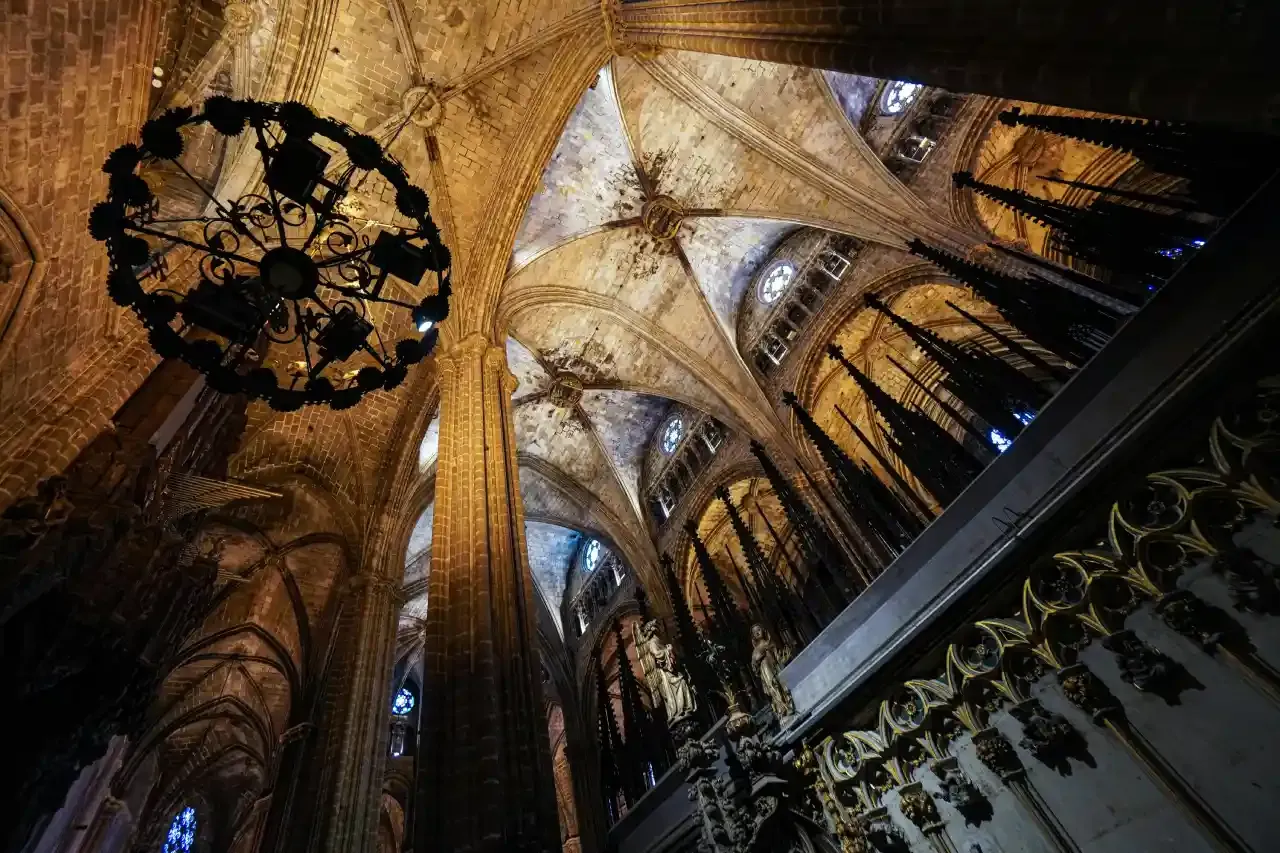
Central nave
The central nave of Barcelona Cathedral follows a Catalan Gothic plan of three aisles lined with twenty-eight side chapels, and it rises to a height of 26 meters. Construction began on 1 May 1298, and the main structure reached completion around the mid-15th century at a length of 93 meters. Stained glass windows dating from the 14th to the 20th centuries filter light onto the stone, while its altarpieces and sculptures show Romanesque, Gothic, and Neo-Gothic styles. Ribbed vaults carry the weight of the walls above the high altar. A walk through the nave and its chapels takes 20 to 30 minutes.
Crypt of Saint Eulalia
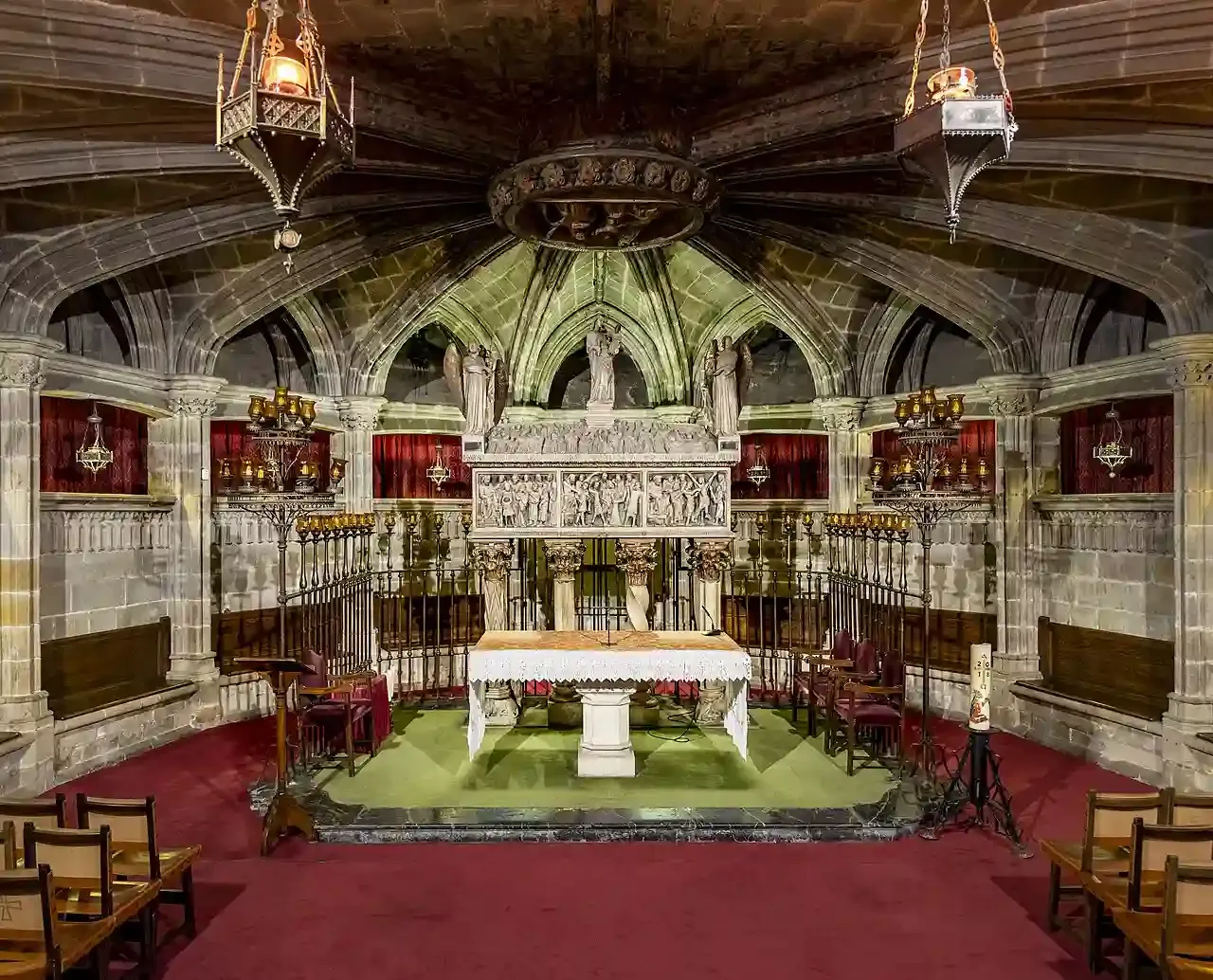
Crypt of Saint Eulalia
The crypt of Saint Eulalia lies beneath the high altar and holds the remains of the co-patron saint of Barcelona. A wide staircase at the center of the nave descends into the vaulted chamber, where stone ribs and carved bosses frame the space. At its center, a marble sarcophagus from the 14th century rests on columns with sculpted capitals, and its reliefs depict scenes from the life of the saint. The Pisan sculptor Lupo di Francesco carved the tomb between 1327 and 1339, in the early Gothic style. A visit to the crypt takes about 5 to 10 minutes.
Photo: “Barcelona Cathedral Interior - Crypt of Santa Eulalia” by Archaeodontosaurus.
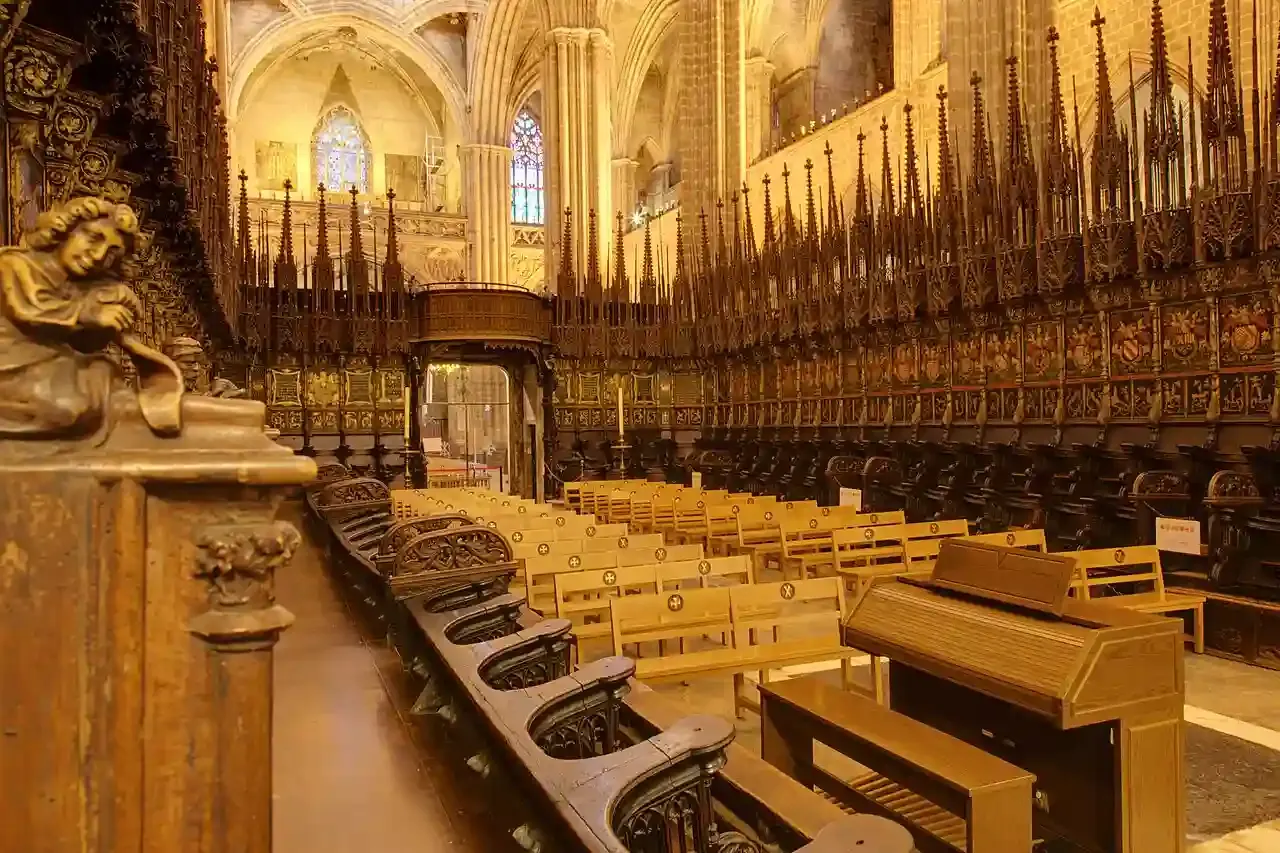
Choir
The choir occupies the center of the main nave and holds two rows of carved wooden stalls from the 14th and 15th centuries. Pere Sanglada began the stalls in 1394, and Michael Lochner and Johan Friedrich added the canopies and pinnacles later in the 15th century. For the 1519 assembly of the Order of the Golden Fleece under Emperor Charles V, the painter Juan de Borgoña set the knights' heraldic shields onto the seat backs. A white marble trasaltar wraps the space with reliefs on the life of Saint Eulalia, and a vaulted canopy crowns the episcopal throne. The cathedral chapter still gathers here during services. Touring the choir takes about 10 minutes.
Photo: “Choir of the Cathedral of Barcelona” by Matthias Kabel.
Cloister
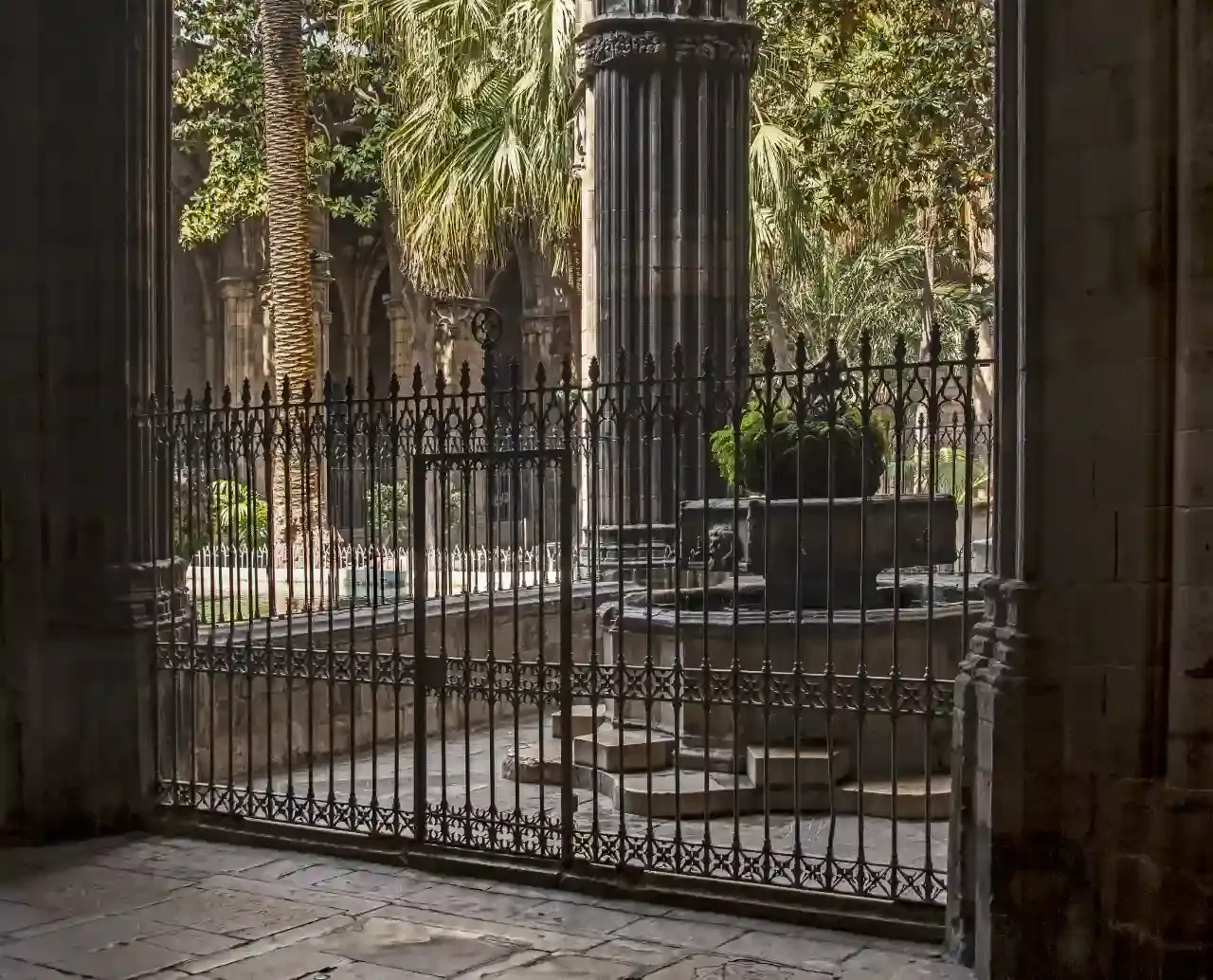
Cloister
The cloister forms a quadrangular courtyard reached through the side doors of Barcelona Cathedral, built across the 14th and 15th centuries and completed in 1448. A garden of palm trees surrounds a mid-15th-century fountain, the Well of the Geese (Font de les Oques), where thirteen white geese live as a reminder of the age Saint Eulalia reached at her martyrdom. Chapels around the galleries honor the guilds and brotherhoods of the city, and the floor stones carry engraved symbols of the trades that paid for the work. The vaulted walkways also lead to the cathedral shop and the museum. A walk around the cloister takes 15 to 20 minutes.
Photo: “Barcelona Cathedral - The fountain of the cloister” by Archaeodontosaurus.
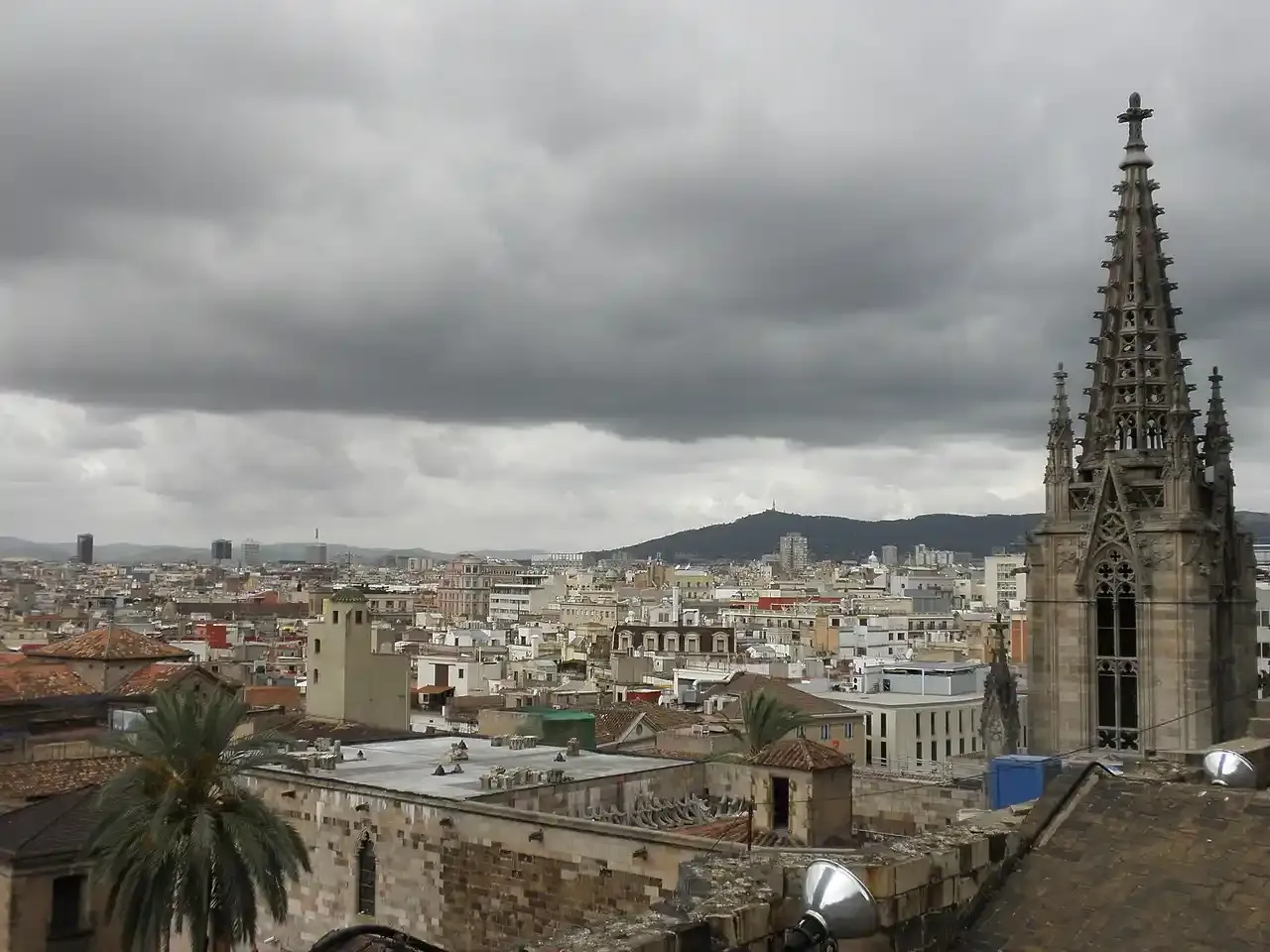
Rooftop
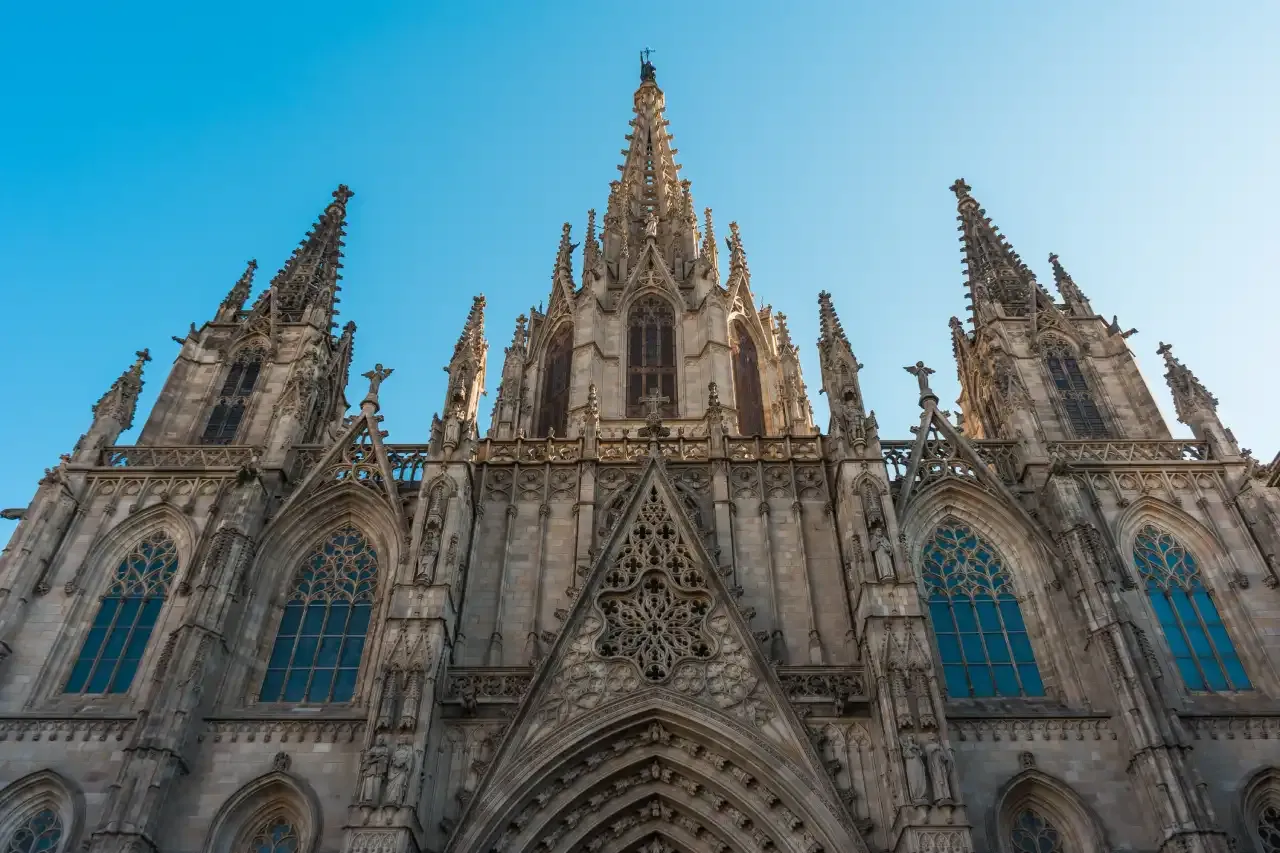
The rooftop of Barcelona Cathedral opens through an elevator in the side chapel of the Holy Innocents. Walkways run past the octagonal bell towers, which reach 54 meters, the pinnacles, and the central spire, the cimborio, which rises to 70 meters over the first bay of the nave near the main facade. The neo-Gothic facade below dates from 1889 to 1913, and visitors take in a 360-degree view across the Gothic Quarter. From this height, the flying buttresses and drainage channels of the medieval structure come into clear view against the modern city beyond. The rooftop tour closes the vertical route through the building and adds about 30 minutes to a visit.
Photo: “Barcelona from the rooftop of the cathedral (Barcelona, Catalonia)” by Panoramio.
Tips for visiting Barcelona Cathedral
A few habits make a visit to Barcelona Cathedral smoother and help travelers get through its busiest corners:
- Arriving at 09:30 on a weekday puts visitors ahead of the tour groups that fill the nave by late morning.
- Saving the rooftop elevator for the end of the route sidesteps the queues that build at the lift during peak hours.
- Covering shoulders and knees clears the entrance check, and stable closed shoes handle the worn stone floors and steps.
- Packing light matters, since the cathedral bars large bags and runs no cloakroom, while luggage storage points sit throughout the Gothic Quarter for anyone arriving with suitcases.
- Flash photography and tripods stay prohibited, and the crypt limits pictures further, so a steady hand works better than extra gear.
- Morning hours give the stained glass its strongest light, and the palm-shaded cloister garden offers a quiet spot to rest mid-visit.
- Religious services take priority over tourist access, and the thirteen cloister geese are live animals that visitors should not feed or disturb.