Visiting Park Güell
Barcelona's hillside Gaudí park runs on timed entry and a schedule that shifts six times across the year, so travelers settle the practical questions before setting out. This page covers the access rules and the mosaic structures of the Monumental Zone.
Plan your visit to Park Güell
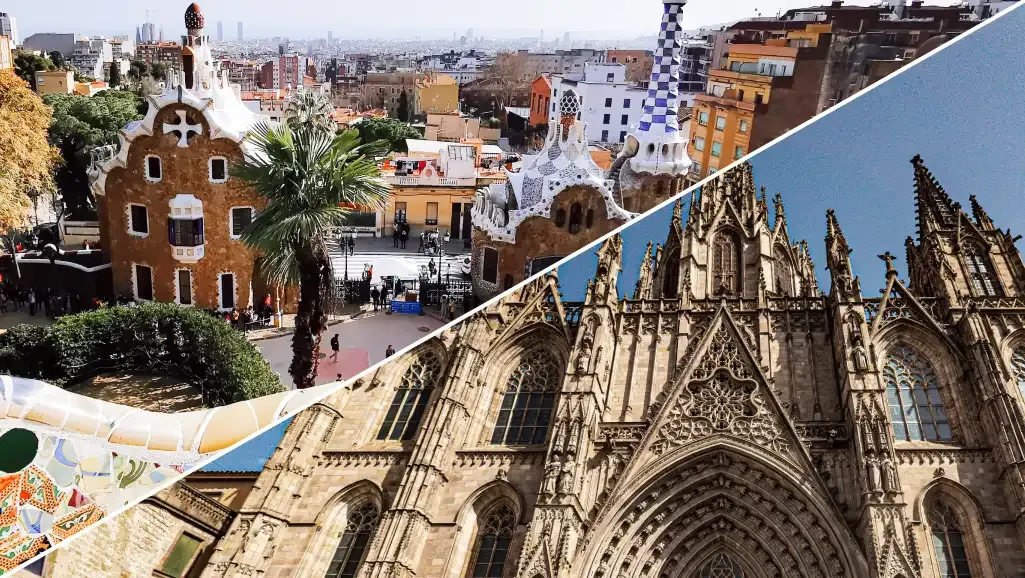
Park Güell, the UNESCO World Heritage-listed public park in Barcelona designed by Antoni Gaudí, draws millions of visitors to its mosaic terraces. Everything needed to plan your visit to Park Güell sits on this page, including the opening hours, the three entrances, and the structures of the Monumental Zone.
A Park Güell visit turns on a few practical points: the seasonal schedule, the uphill approach, and the rules that govern entry to the Monumental Zone. The list below answers the questions travelers ask most often:
- What are the opening hours of Park Güell? The park opens at 09:30 for most of the year and at 09:00 during July and August. Last admission runs between 17:30 and 19:30 depending on the season, with the latest entry times from late March through October.
- Is Park Güell open every day? Yes. The Monumental Zone admits visitors 365 days a year, including Christmas and New Year's Day, and keeps no weekly closing day. Daily capacity stays limited to protect the UNESCO World Heritage structures.
- Are any hours reserved for Barcelona residents? Yes. Registered residents access the park through the Passi Verd system during Bon Dia Barcelona, from 07:00 until ticketed entry begins, and Bon Vespre Barcelona, which starts between 18:00 and 20:00 depending on the season and runs to 22:00. Tourists cannot book those slots.
- What is the best way to get to Park Güell? Bus 24 departs from Plaça de Catalunya and drops passengers at the Carretera del Carmel entrance, higher up the hill, which avoids the steepest part of the climb. Lines H6 and D40 also stop near the site.
- Which metro stop is closest to Park Güell? Lesseps station on Line 3 is the best metro access point, followed by a walk of about 15 minutes. Vallcarca, also on Line 3, connects to the escalators on Baixada de la Glòria.
- How far is Park Güell from the city centre? The park lies about 2 miles from Plaça Catalunya, a 30-minute walk or a short metro ride away. Walking routes from the nearest stations run uphill and take 15 to 25 minutes.
- When is the best time to visit Park Güell? March, April, September and October bring milder temperatures and thinner crowds. Weekdays draw the fewest visitors, and the windows from 09:00 to 11:00 or the final two hours before closing stay calmest.
- How long does a visit to Park Güell take? Most visitors allow 90 minutes to 2 hours to cover the Monumental Zone and the forest paths that surround it.
- Is Park Güell wheelchair accessible? The hilly terrain and uneven paths challenge visitors with reduced mobility. Staff recommend the Carretera del Carmel entrance for its flatter ground, the tourist information centre lends wheelchairs on prior request, and a digital map marks the routes that avoid steep inclines.
- Does Park Güell have parking? The site has no public parking, and nearby spaces stay reserved for residents and coaches. Drivers use commercial garages in the Gràcia or El Carmel neighbourhoods, while the taxi stand is located on Carretera del Carmel.
Explore whatever you need in detail
Tickets and general information
The venue hub gathers every bookable Park Güell product alongside the general visitor details for the Monumental Zone, the three entrances, and the Gaudí House Museum.
Opening hours
Entry times shift with the season across six distinct periods, and the Gaudí House Museum keeps a schedule of its own, including reduced hours on public holidays.
How to get there
Most travelers reach Carmel Hill by metro or bus, and the walking routes, escalators, taxis, and garage options each get their own breakdown.
Map and entrances
Three main gates open onto the grounds, and each one lands visitors at a different elevation and a different corner of the Monumental Zone.
Inside the park
The mosaic lizard on the Dragon Staircase anchors the historic entrance, where the trencadís technique that defines the park appears at full scale.
Where is the Park Güell located?
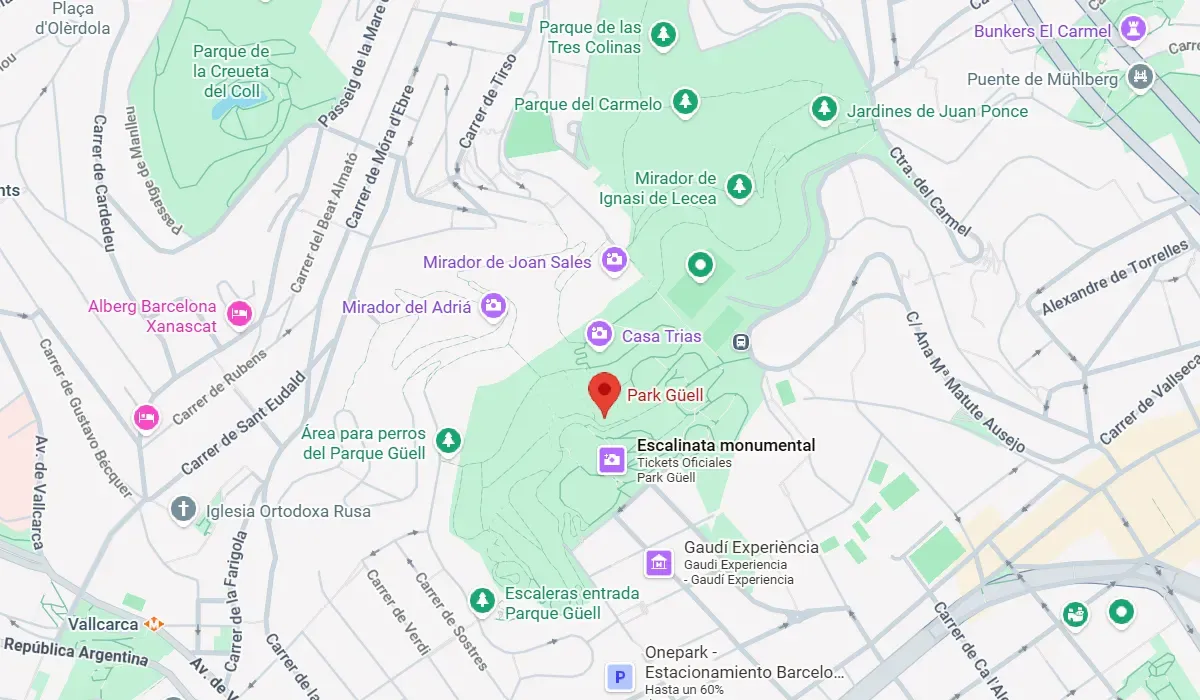
Where is the Park Güell located?
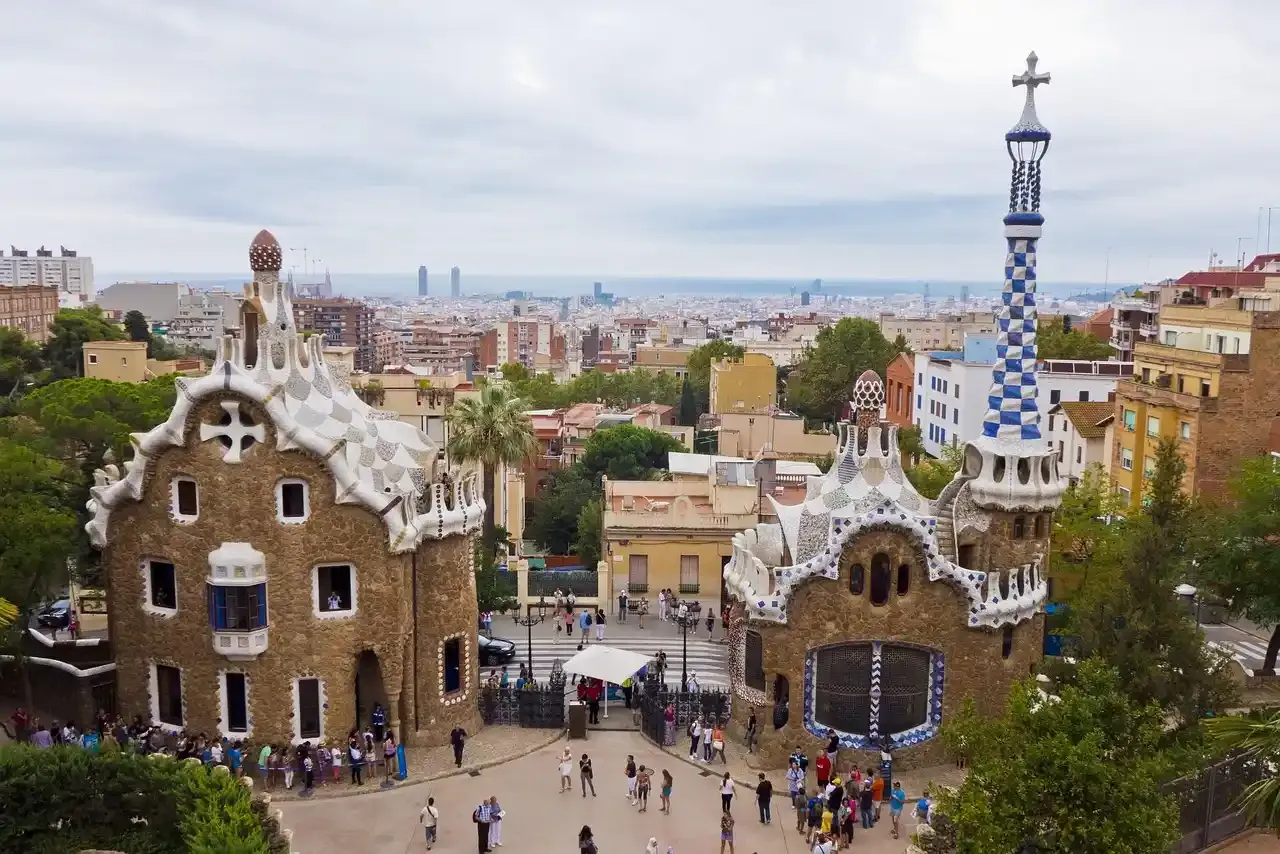
Park Güell occupies a stretch of Carmel Hill at Carrer d'Olot, s/n, 08024 Barcelona, Spain. The address falls inside the Gràcia district, a residential quarter of steep streets and Mediterranean vegetation. Two neighbouring attractions sit beside the grounds: the Gaudí House Museum, where the architect lived, and the Carmel Bunkers, a city viewpoint. The surrounding neighbourhoods of El Coll and Vallcarca keep their traditional architecture and local cafés. Travelers pair the monumental area with a walk through the nearby hills of northern Barcelona to see the city from different elevations.
Book your ticket to Park Güell
What to see at Park Güell
Park Güell opens six main points of interest across the Monumental Zone and the wooded slopes above it: the mosaic lizard, the Hypostyle Room, the Nature Square, the serpentine bench, the Gaudí House Museum, and the Hill of the Three Crosses. Gaudí laid out the park between 1900 and 1914 as a residential community for the city's elite, and although the housing project never finished, the site became a public work that fused natural forms with modernist design.
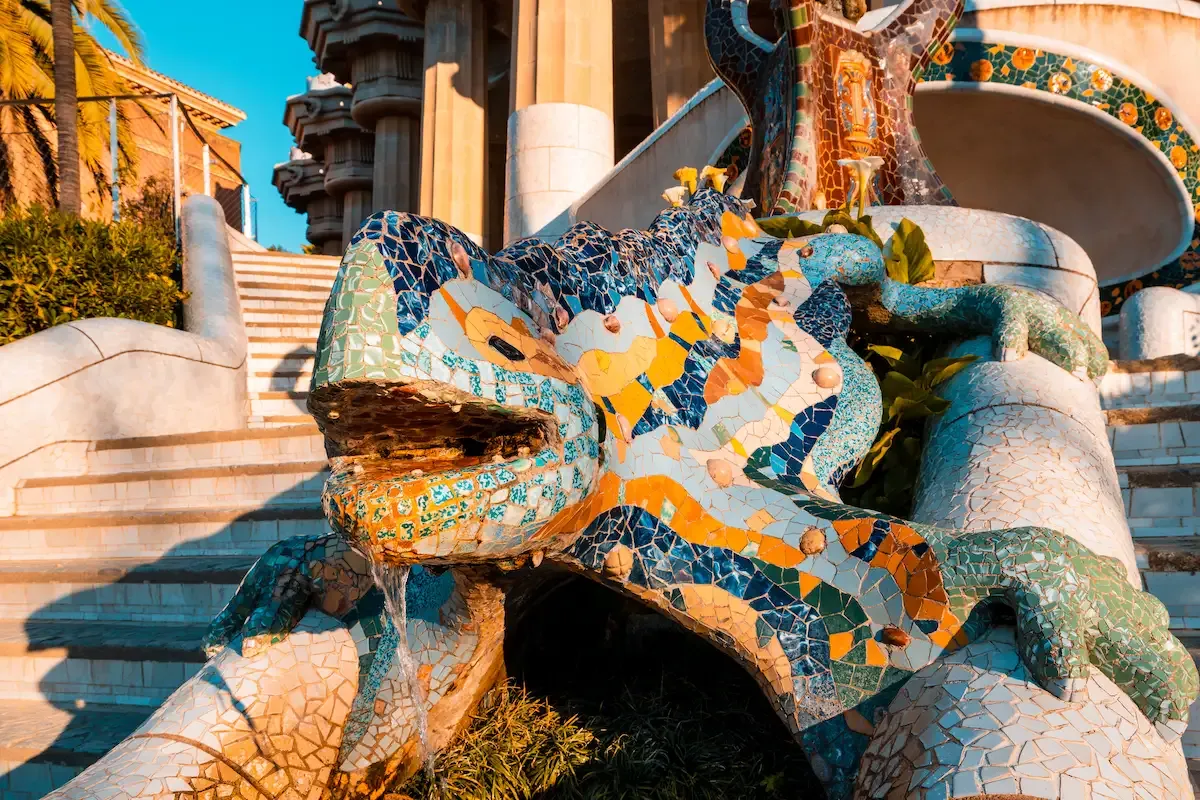
The Lizard
The Park Güell lizard, known locally as El Drac, is the symbol of the monumental zone. The multicoloured sculpture sits on the Dragon Staircase at the historic entrance, its surface built from trencadís, the technique of joining irregular pieces of broken ceramic. Gaudí conceived the creature as an artistic centrepiece and as a working part of the park's water drainage system, where it acts as the overflow outlet for an underground cistern. Despite the dragon name, the anatomy is that of a salamander. The staircase went up between 1900 and 1914, and a 2007 restoration repaired damage from visitor contact. Touring the staircase and the lizard takes 10 to 15 minutes, longer when queues form for photographs.
Hypostyle Room
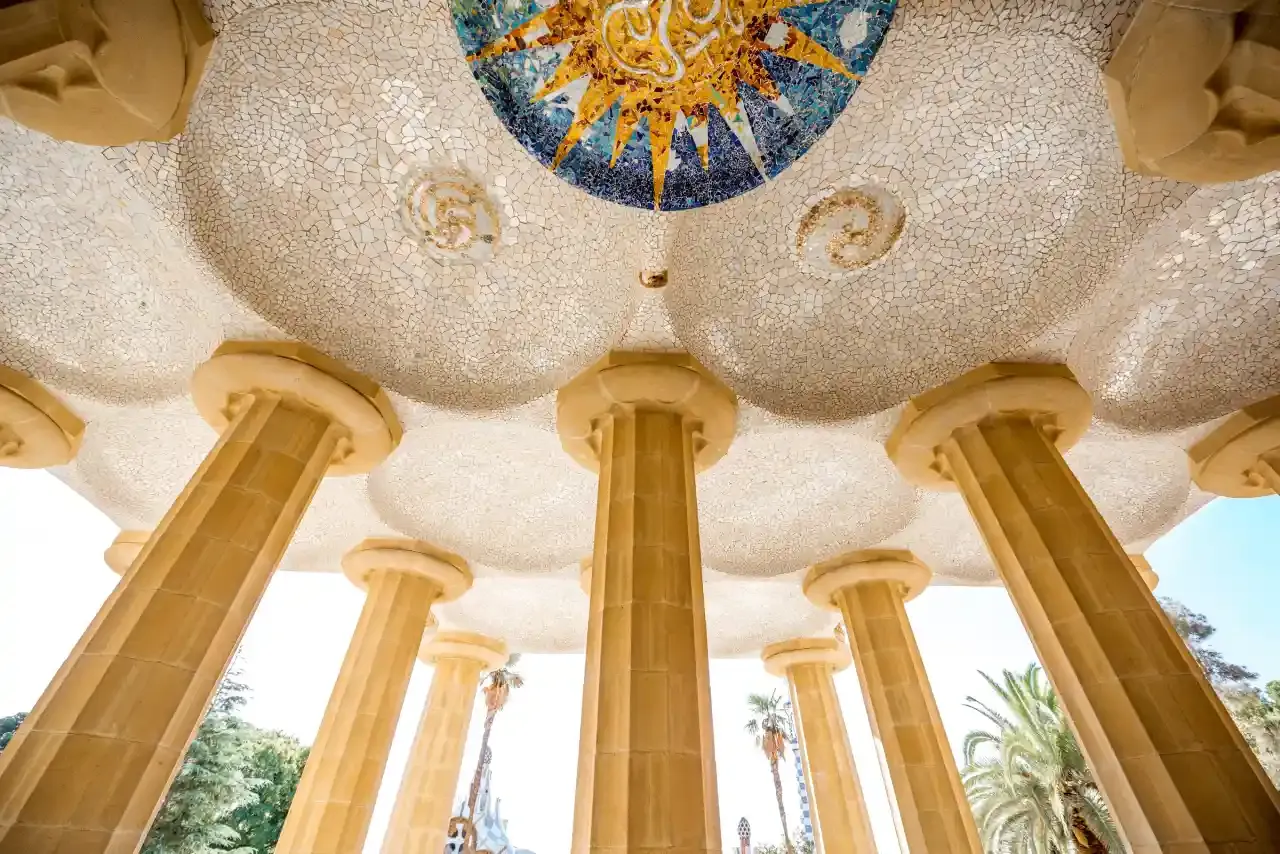
Hypostyle Room
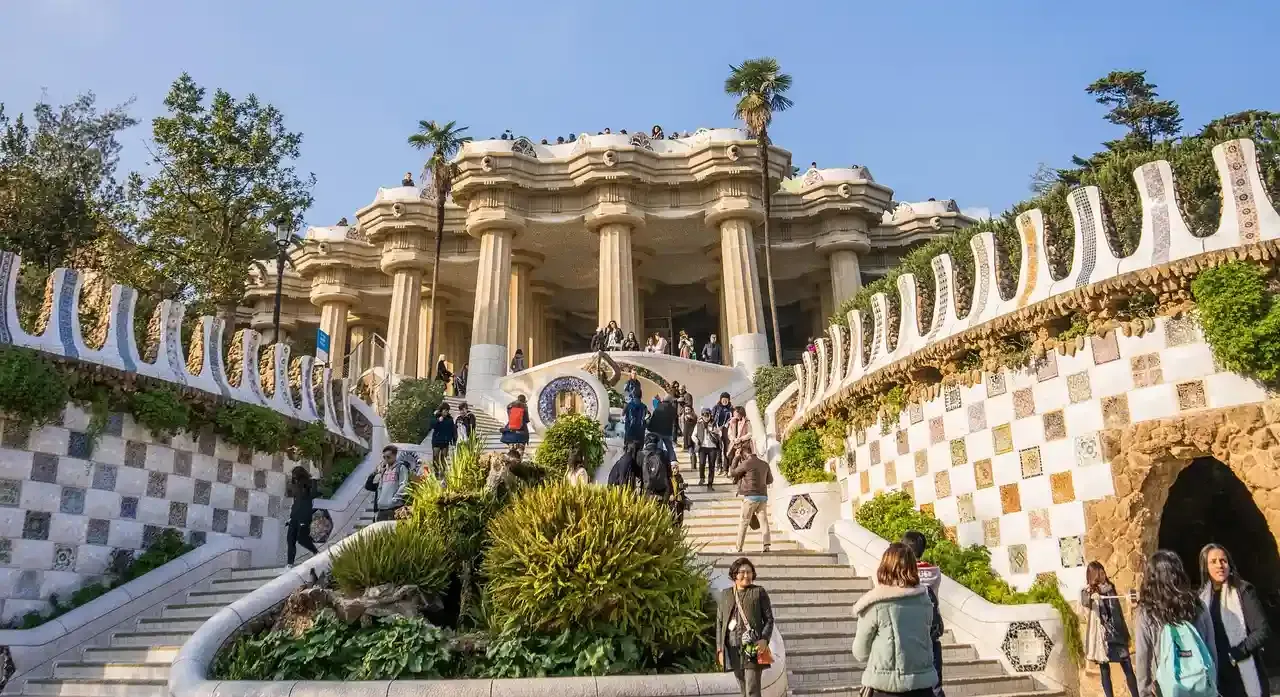
The Sala Hipóstila is a forest of 86 fluted stone columns raised between 1906 and 1914 beneath the Nature Square. Gaudí intended the hall as the marketplace of the residential estate he was laying out, and its Doric proportions carry a neoclassical influence alongside his own structural invention. The hollow columns carry rainwater from the terrace above down into the cistern. The outer pillars lean inward to absorb the weight pressing on them. Small clay brick domes form the ceiling, set with 18 circular trencadís medallions, or rosasses, which Josep Maria Jujol designed and executed to evoke celestial and natural cycles. Walking the hall takes around 10 minutes.
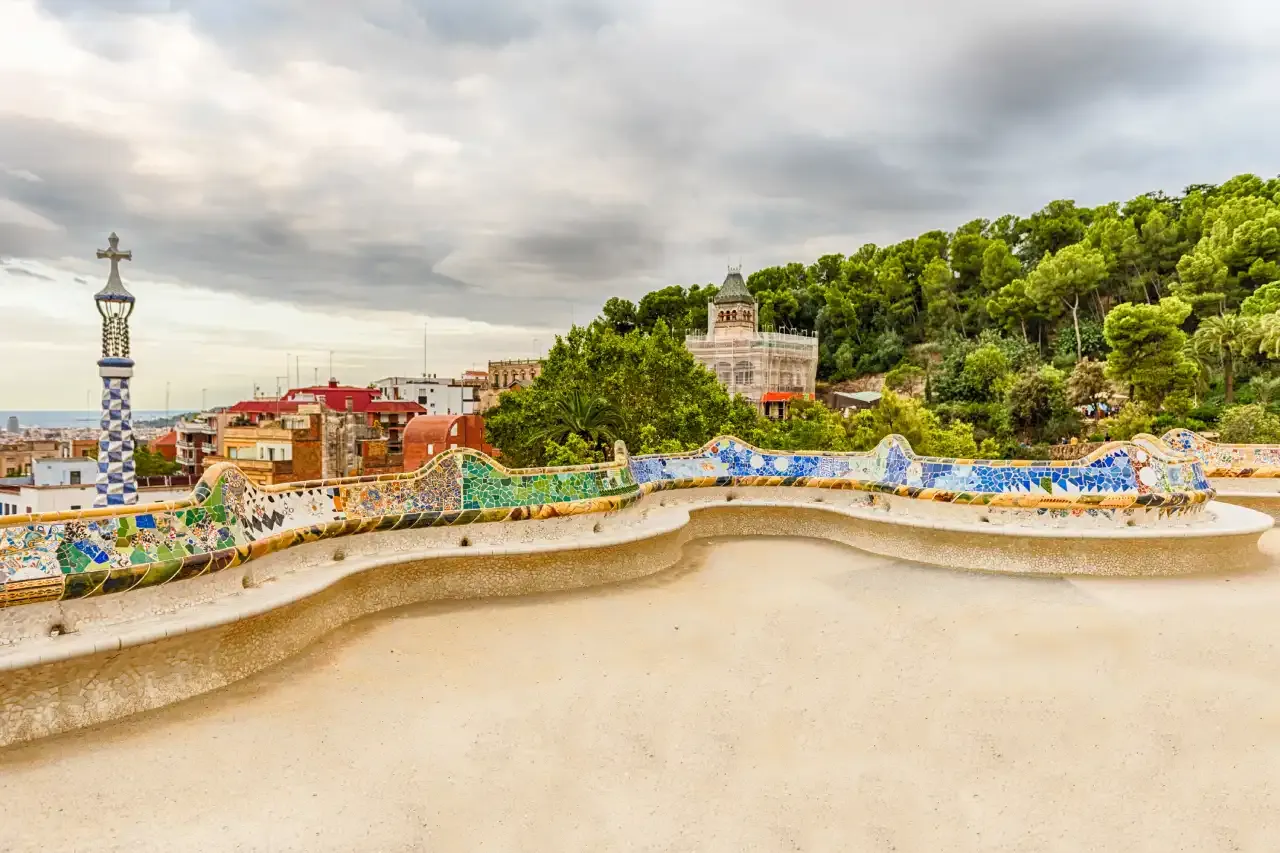
The Square
The Plaça de la Natura is the central open space of the monumental area, an artificial esplanade of 2,694 square metres, 86 metres by 43 metres. Built between 1907 and 1913 and first named the Greek Theatre, the terrace rests on the columns of the Hypostyle Room, and Gaudí designed it as an open-air stage for community performances. He left the surface unpaved so that rain filters through the ground, runs down the hollow columns, and collects in a 1,200 cubic metre underground cistern. From the edge, framed by the colourful serpentine bench, visitors take in views of the Barcelona skyline and the Mediterranean Sea. Crossing and lingering on the square takes 15 to 20 minutes.
The Bench
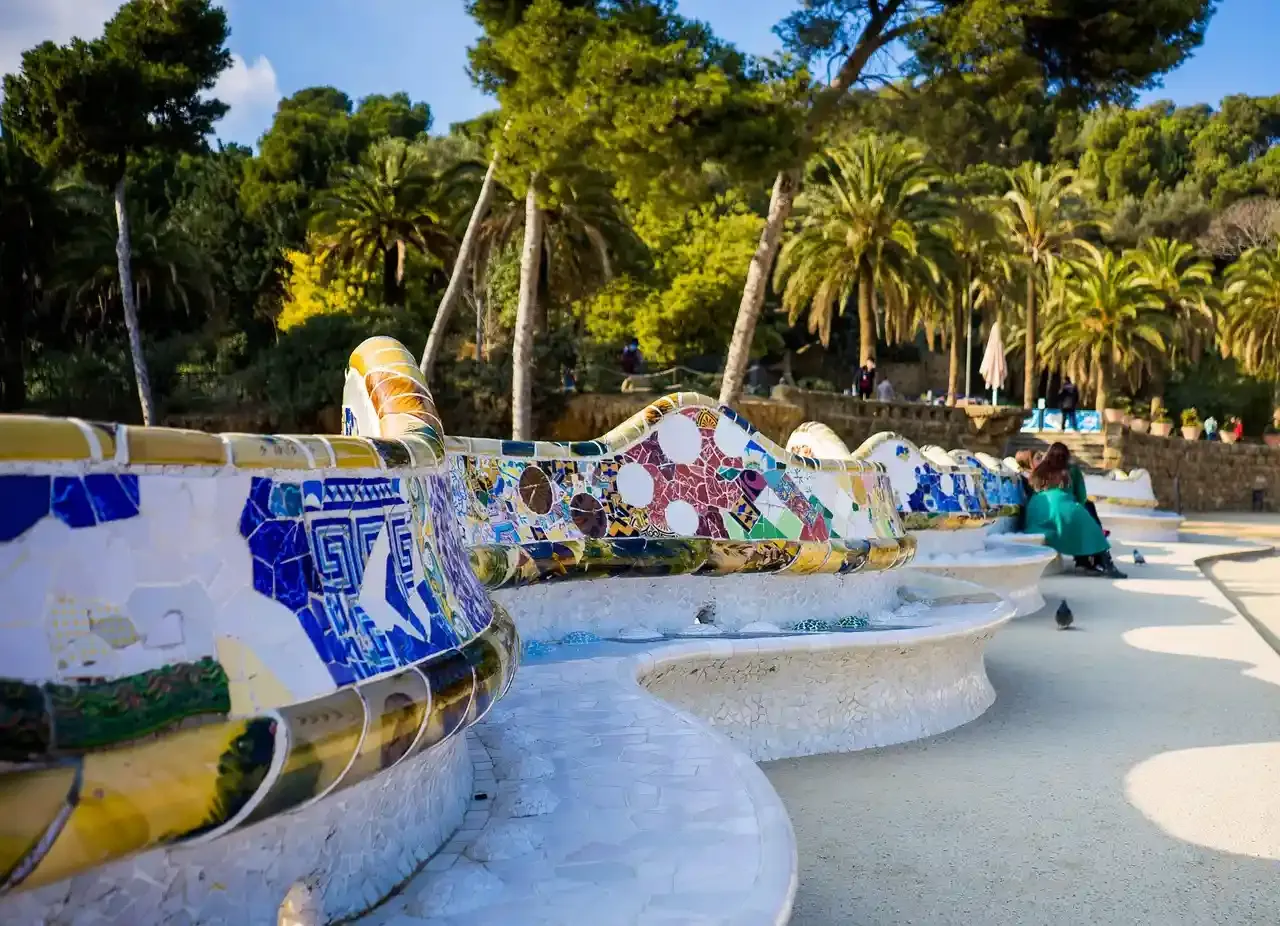
The Bench
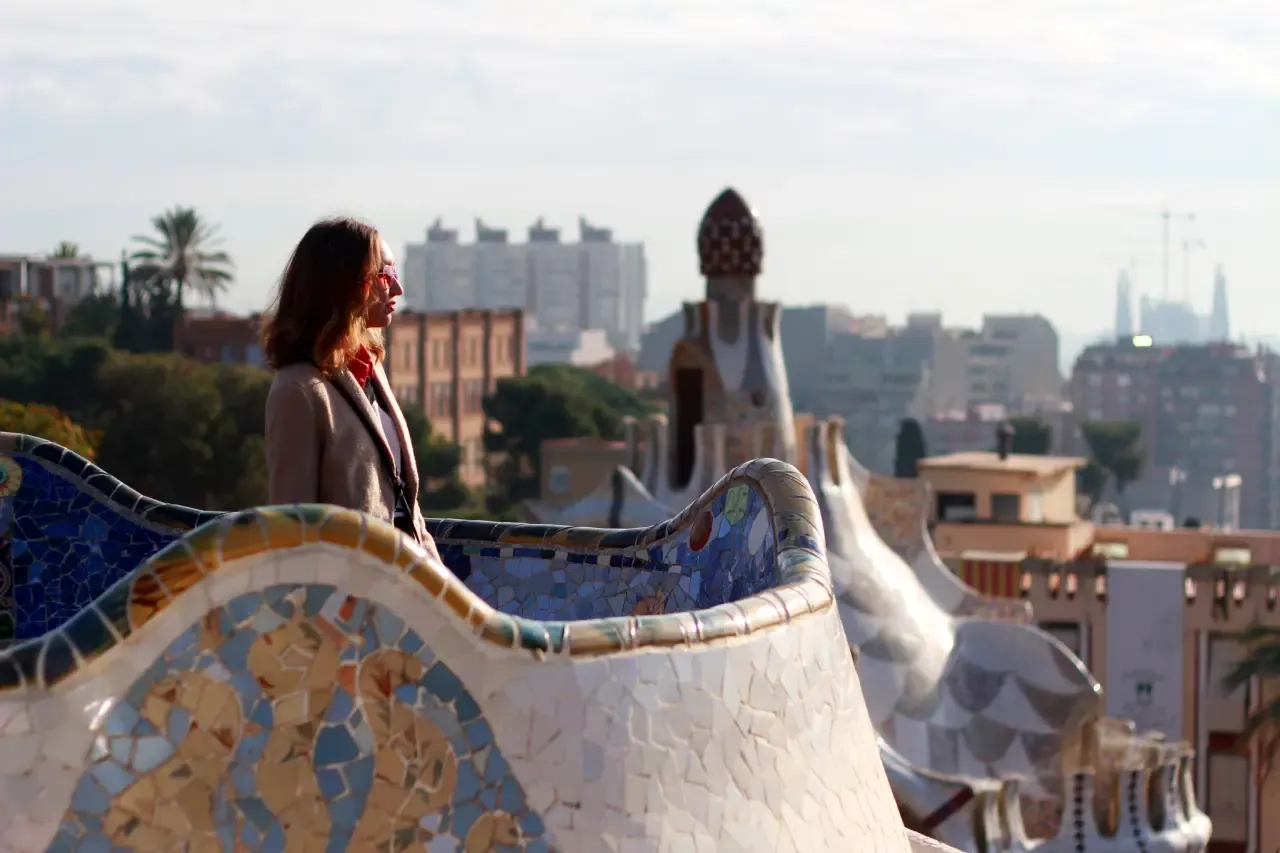
The serpentine bench lines the perimeter of the Nature Square, winding like a giant serpent for 110 metres, the longest continuous undulating public bench in the world. Gaudí shaped its curves to fit the human form so that those who sit to enjoy the views stay comfortable, and a legend holds that the mould came from a workman pressed into wet plaster. Josep Maria Jujol led the trencadís surface, a collage of discarded tiles and glass in irregular ceramic fragments. Beyond the decoration, the bench is a structural railing and the first stage of a drainage system that filters rainwater into the cistern below. Circling the bench and sitting a while takes 10 to 15 minutes.
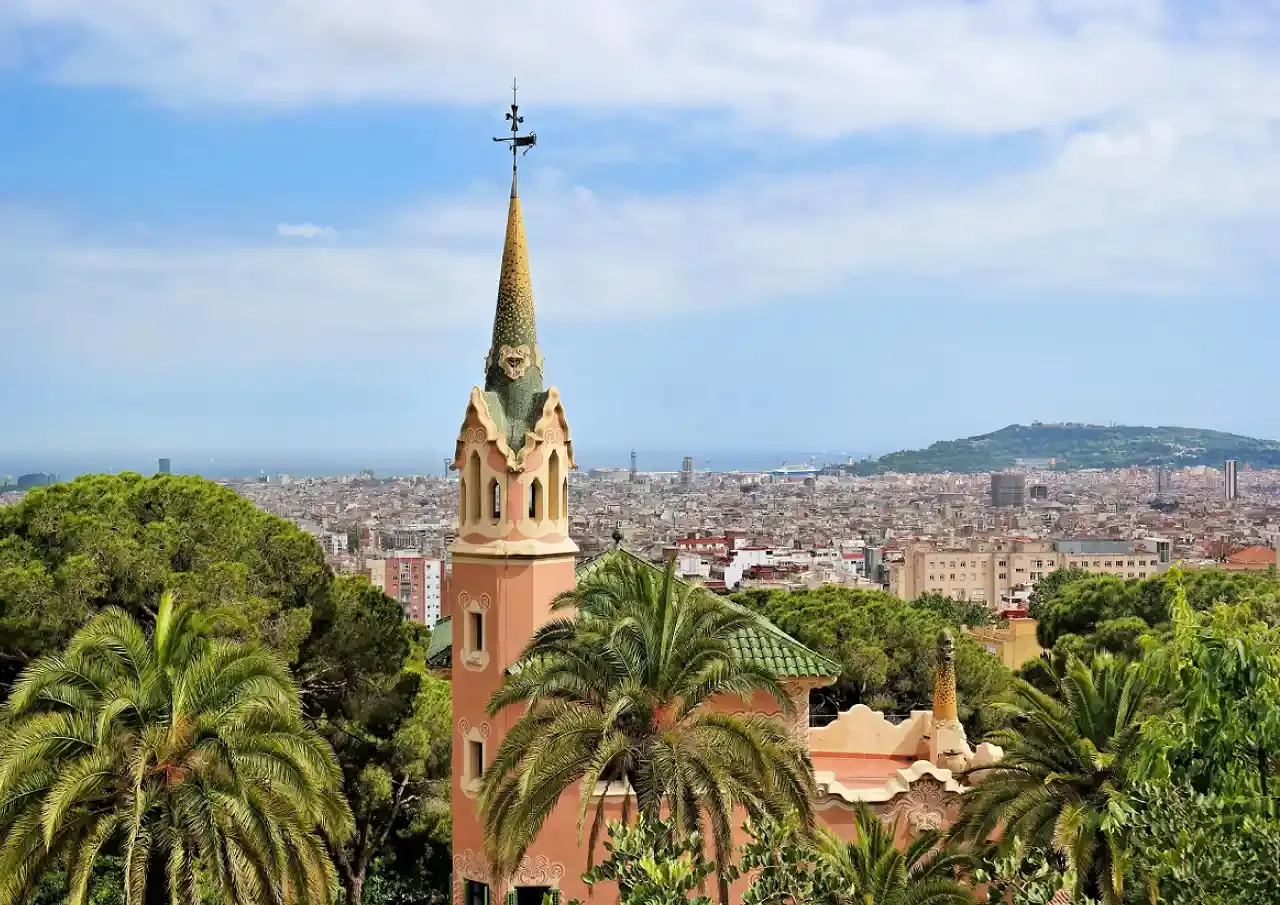
Gaudí House Museum
The Casa-Museu Gaudí is the house where Antoni Gaudí lived from 1906 to 1925, before he moved into the Sagrada Familia workshop. Francesc Berenguer i Mestres designed the building between 1903 and 1904 as a model home meant to attract buyers to the estate, and Gaudí signed the plans because Berenguer held no architect's qualification. Since opening as a museum in 1963, the house has displayed furniture, drawings and personal belongings from Gaudí and his collaborators, including pieces made for Casa Batlló and Casa Calvet. The park's gardens surround the house, whose rooms show Gaudí's modernist principles applied to everyday interiors. A tour takes 30 to 45 minutes.
Hill of the Three Crosses
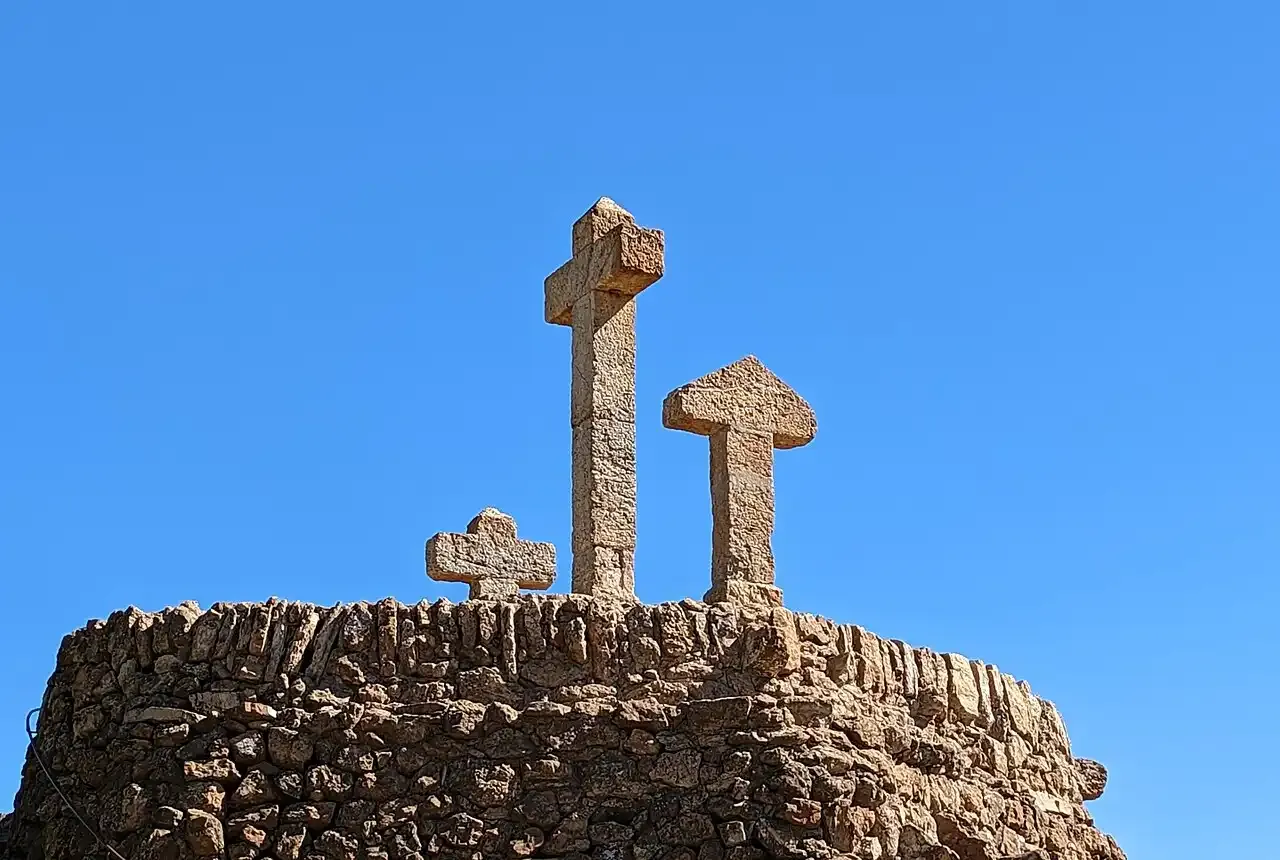
Hill of the Three Crosses
The Turó de les 3 Creus marks the highest point within Park Güell, at 182.30 metres above sea level, with a 360-degree view over the city. Gaudí had planned a chapel for this spot, but the discovery of prehistoric remains ended that scheme, and he built a stone monument known as the Calvary instead, its form drawn from prehistoric structures. Three stone crosses crown the peak, two of them pointing toward the cardinal directions and the third shaped as an arrow. Travelers reach the summit by climbing stone steps cut into the hillside, and many stay for the sunset. The climb and descent take 20 to 30 minutes.
Tips for visiting Park Güell
A few habits keep a Park Güell visit on schedule and inside the park's access rules:
- Booking a timed entry online well ahead secures a slot, and the ticket admits its holder to the Monumental Zone within a 30-minute window from the time printed on it.
- The park does not allow re-entry, so visitors who leave the Monumental Zone cannot go back in.
- Non-slip walking shoes handle the steep, uneven paths and the stone steps better than smooth soles.
- Visitors can take personal photographs throughout, while drones and large tripods need prior express authorisation and commercial shoots need a permit.
- Flash stays restricted near the mosaic surfaces and inside the Hypostyle Room.
- Visitors picnic only in the designated areas of the park.
- Shade is limited on the open terraces, so visitors carry a refillable water bottle and sun protection.