Visiting the Sagrada Familia
A smooth day at the Sagrada Familia, Antoni Gaudí's basilica in Barcelona's Eixample district, comes down to a few decisions: when to arrive, which ticket to book, what to wear inside an active church, and what to look for once past the doors. The sections below cover each one.
Plan your visit to Sagrada Familia
The Sagrada Familia (Catalan: Basílica de la Sagrada Família) is Antoni Gaudí's unfinished basilica in Barcelona, with its Nativity facade and crypt inscribed on the UNESCO World Heritage list in 2005 as part of the Works of Antoni Gaudí. The timing, tickets, dress rules, and highlights that shape a visit appear below to help plan your visit to Sagrada Familia.
Information about your visit to Sagrada Familia
The Sagrada Familia is both a working church and one of Barcelona's most-visited buildings, so a few logistics are worth settling before a visit. The essentials cover the following:
- What are the opening hours? The basilica opens daily at 09:00 on weekdays and 10:30 on Sundays, with closing times that shift by season between 18:00 and 20:00. Reduced hours of 09:00 to 14:00 apply on 25 December, 26 December, 1 January, and 6 January.
- When are Mass and prayer times? International Mass runs in the main nave on Saturdays at 20:00 and Sundays at 09:00, while daily parish Mass takes place in the crypt. Services run on a first-come, first-served basis, with no ticket required.
- When is the best time to visit? Weekday mornings around 09:00 draw the smallest crowds, and Tuesday through Thursday stay quietest. Midday between 12:00 and 15:00 is the busiest window.
- How long does a visit take? A standard visit to the basilica and museum takes 1.5 to 2 hours, extending to about 3 hours with the towers and the audio guide.
- Is there a dress code? The basilica requires covered shoulders and clothing that reaches at least mid-thigh. Sleeveless tops, swimwear, and sheer garments lead to refused entry, and hats come off inside the nave, though religious head coverings remain permitted.
- Is the basilica accessible? An adapted entrance on Carrer de la Marina serves wheelchair users, and the main floor and museum keep level, ramped access throughout. The bell towers remain off-limits to wheelchairs because of their narrow spiral staircases.
Explore whatever you need in detail
Each stage of a Sagrada Familia visit has its own page, so travelers can go straight to the topic that matters most to their plans.
Home
The venue overview and the full range of tickets sit at the hub, the natural first stop before narrowing down any single logistical detail.
Opening hours
Visiting hours change by season and on special closing dates, so confirming the exact schedule for the intended day keeps the plan on track.
Mass times
Liturgical services follow their own timetable, apart from general visiting hours, so anyone attending Mass should confirm it in advance.
Best time to visit
Visitor volume swings through the day and across the seasons, so the arrival time changes how crowded the nave feels.
Dress code
The basilica remains an active place of worship, and its attire rules apply at the checkpoint before security grants entry.
Map and entrances
Separate gates serve general ticket holders, groups, and worshippers, so knowing the layout in advance points visitors to the right access point.
Inside and what to see
The nave, the facades, and the towers each hold distinct highlights that reward a quick preview before the tour begins.
Things to do near
The surrounding Eixample district has plenty of places to eat and explore once the basilica visit wraps up for the day.
Comparisons
Barcelona has two cathedral-scale churches, which leaves many visitors weighing one against the other before deciding where to spend their time.
Where is the Sagrada Familia located?
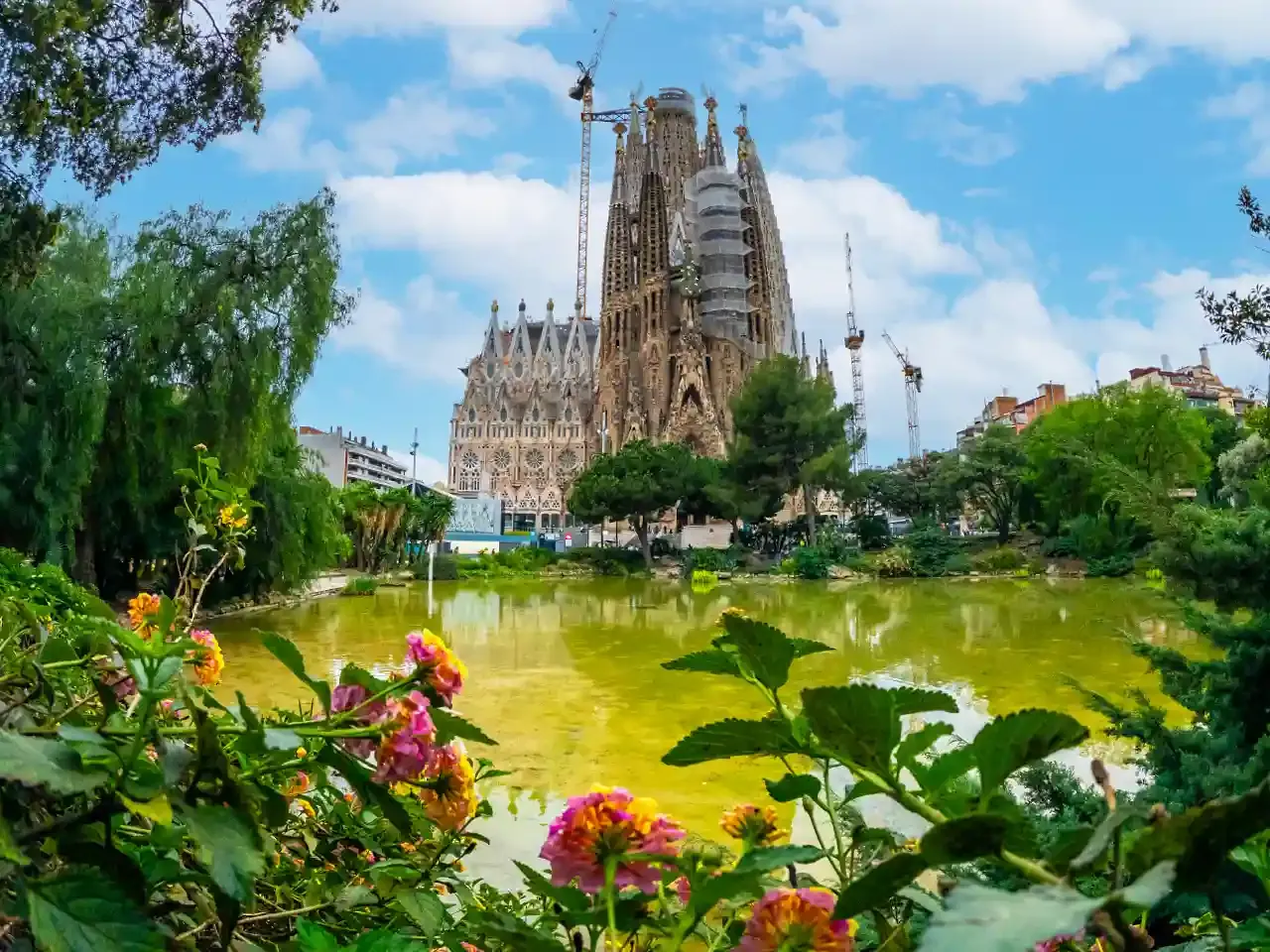
Where is the Sagrada Familia located?
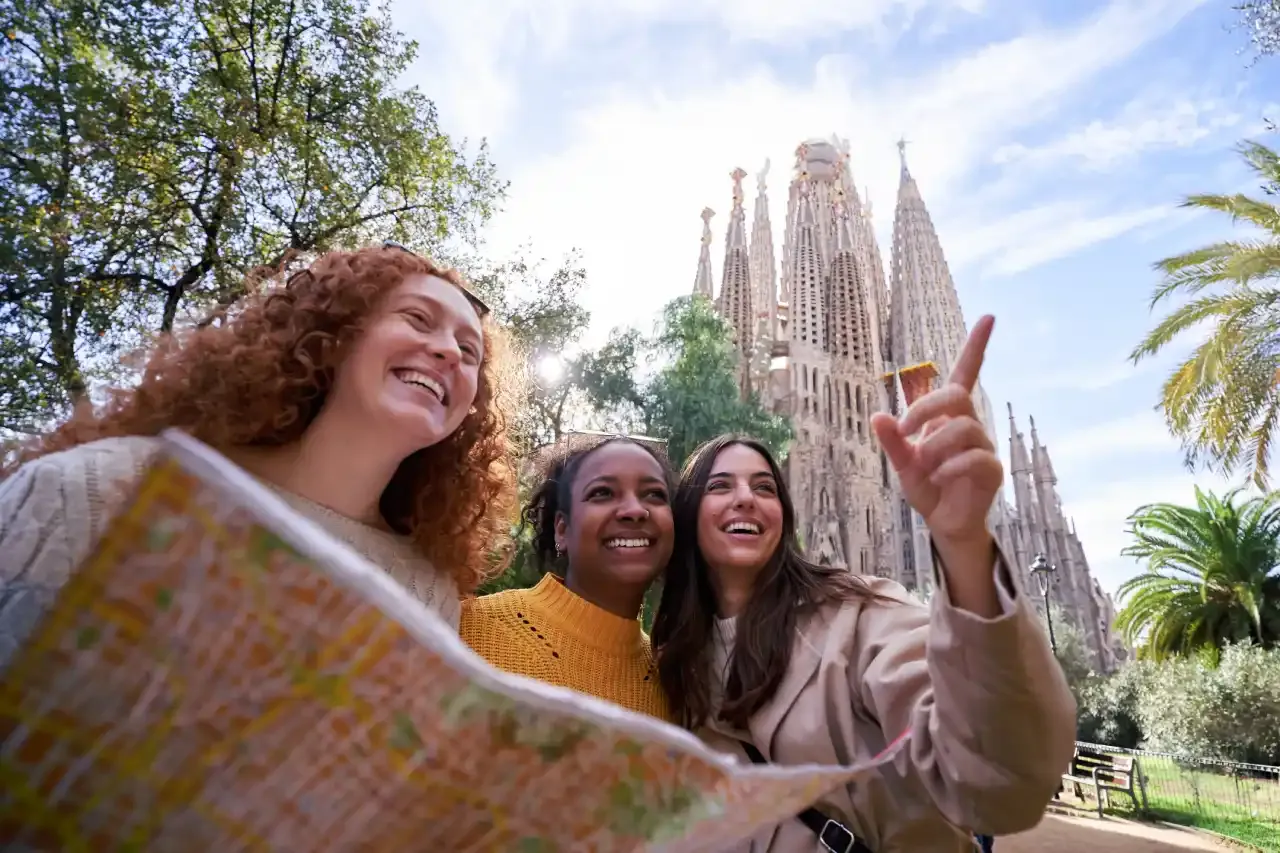
The Sagrada Familia stands at Carrer de Mallorca 401, in the Eixample district of Barcelona, within the district's grid of wide avenues and modernista architecture. Two open squares frame it. The Plaça de la Sagrada Família and the Plaça de Gaudí both give clear sightlines to the facades and spires, and close by, the Avinguda de Gaudí runs as a pedestrian promenade lined with cafes and shops, leading toward the Hospital de Sant Pau.
Book your ticket to Sagrada Familia
Entry to the Sagrada Familia runs on timed slots that sell out well ahead, so booking online secures a set entry time and a place past the queue. A selection of the most popular options sits below, with the full range on the Sagrada Familia tickets hub.
What to see at Sagrada Familia
A Sagrada Familia ticket opens the full basilica: the tree-lined nave, the onsite museum, and the facades that wrap the exterior. Inside, branching columns rise toward hyperboloid vaults while stained glass by Joan Vila-Grau washes the stone in shifting color. Outside, the Nativity and Passion facades tell opposite chapters of the same story, and the Glory facade takes shape as the future main entrance. The sections below preview each part in turn.
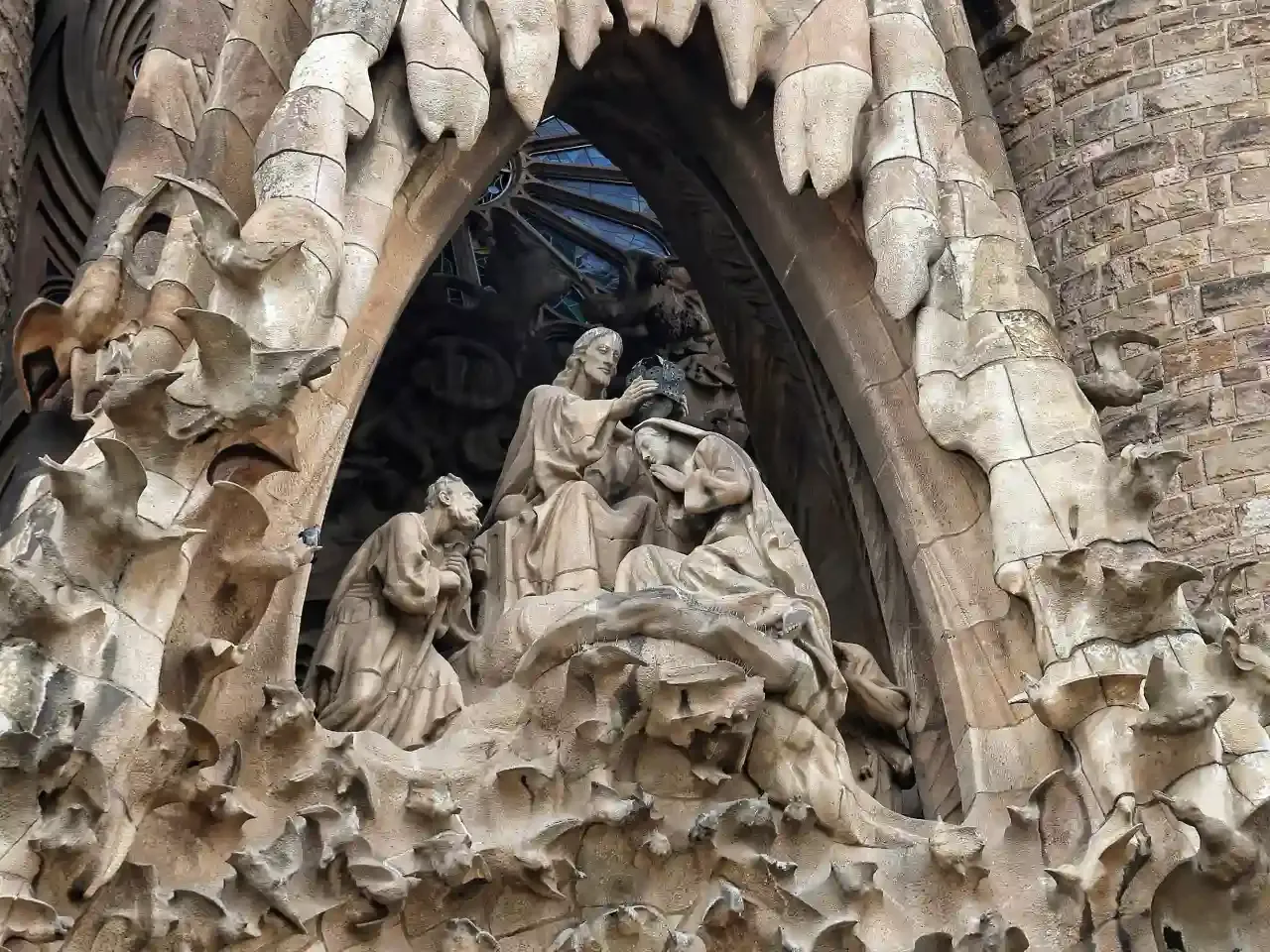
Nativity façade
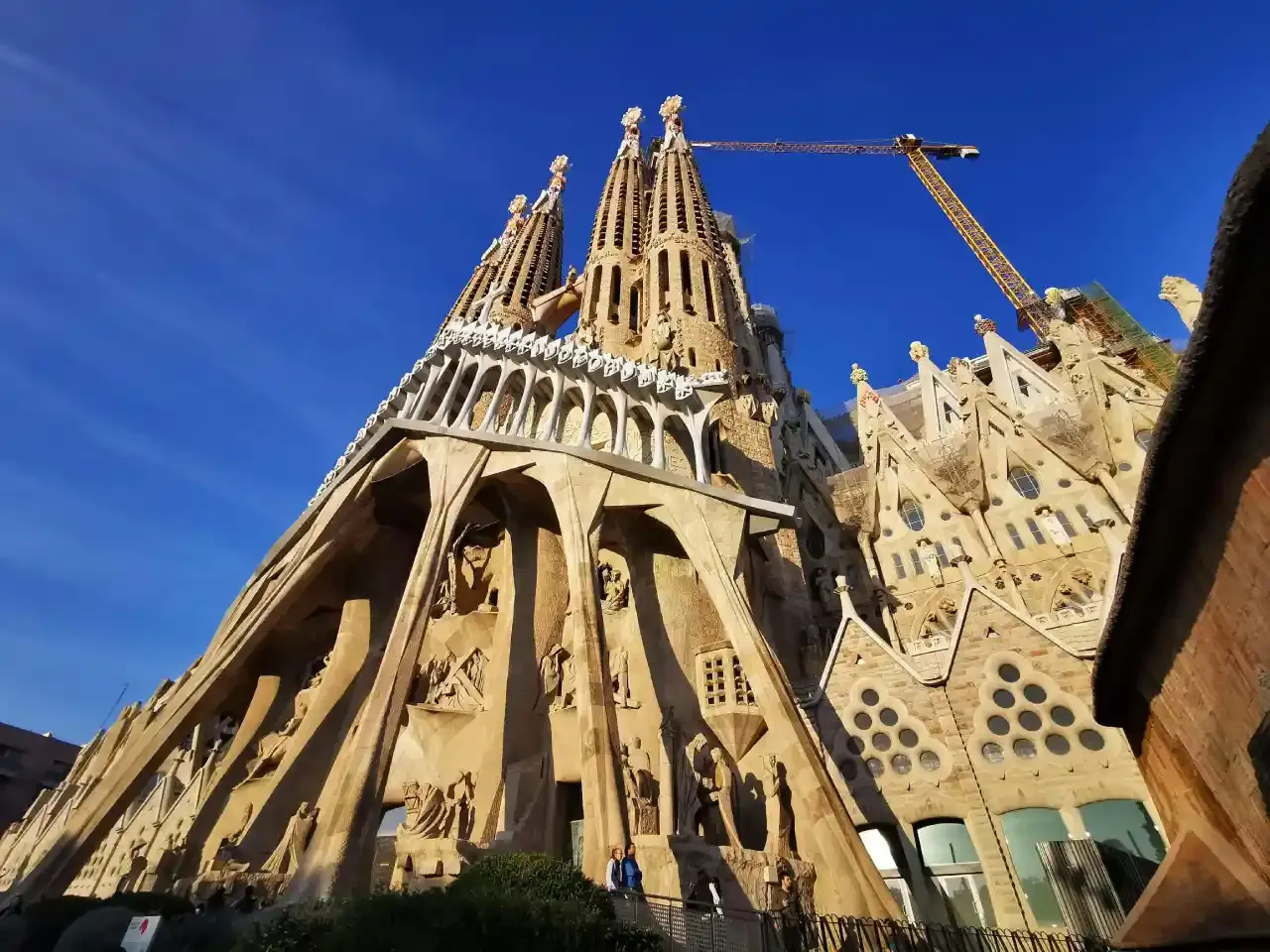
The Nativity facade faces the sunrise on the eastern side of the basilica and celebrates the birth of Jesus across three portals named Hope, Charity, and Faith. Antoni Gaudí oversaw this section himself before his death in 1926, the only part of the exterior that took shape during his lifetime. Gaudí kept the sculptures naturalistic: a cypress tree crowned with a white dove stands for the Holy Spirit, carved turtles support the base columns, and birds nest in the stonework, forms he modeled from live studies and casts. Morning light through the doorway warms the birth scenes and their theme of new life. A close look at this facade takes around 15 minutes.
Passion façade
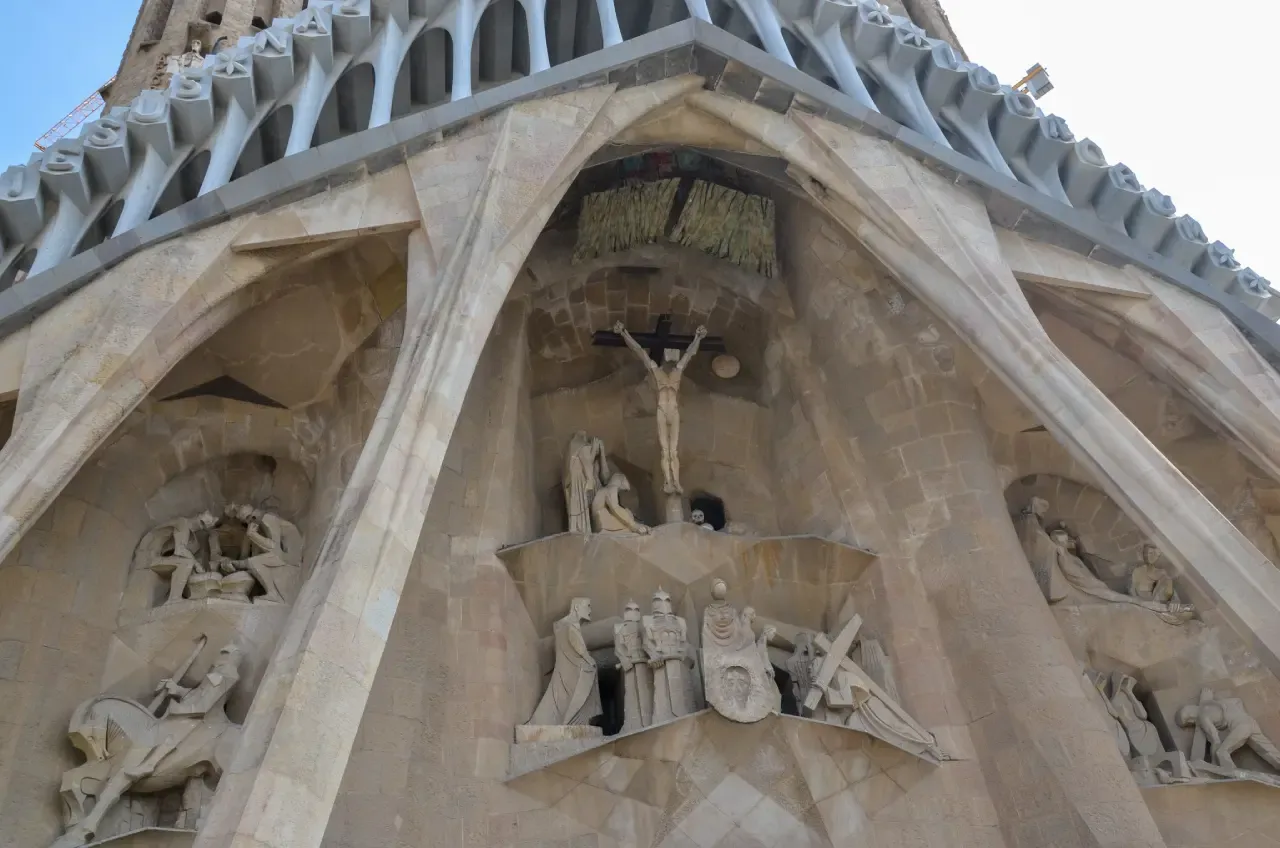
Passion façade
The Passion facade rises on the western side of the basilica and depicts the suffering and death of Christ through austere lines and sharp angles. Sculptor Josep Maria Subirachs began work on its statues in 1987, arranging them along a chronological path through Jesus's final days and stripping each figure down to bone-like, minimalist forms that contrast with the ornamental Nativity side. Visitors trace the stations of the Passion and study the magic square, a four-by-four grid where each row, column, and diagonal adds up to 33, the age of Christ at the crucifixion. Behind the Kiss of Judas, an S-shaped curve stands in for the serpent of betrayal. Late-afternoon sun casts long shadows here, and a close look takes about 15 minutes.
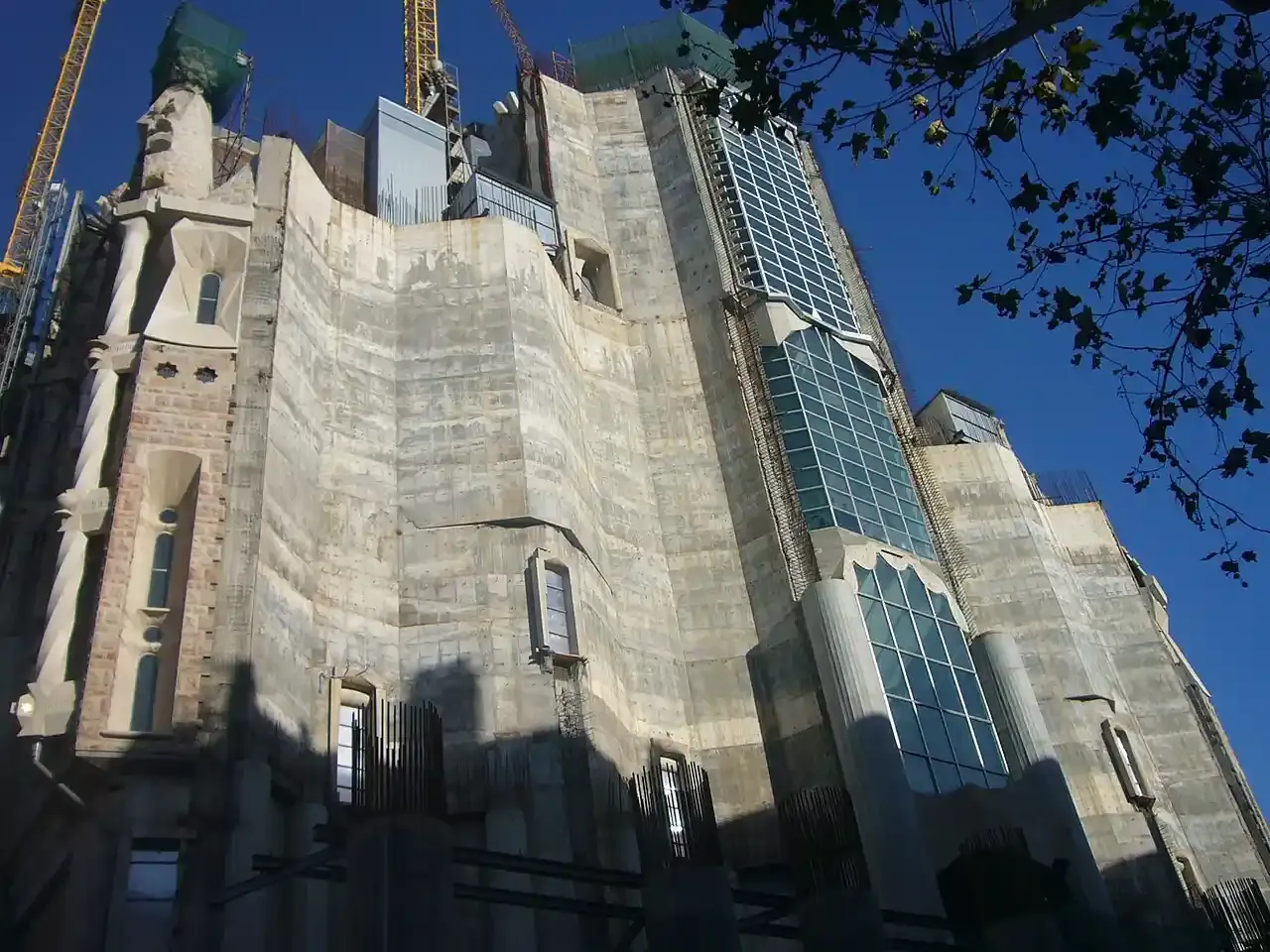
Glory façade
The Glory facade will be the basilica's main entrance, opening onto Carrer de Mallorca, and once finished it will be the largest of the three facades. Its theme is the path to God through death, final judgment, and glory. Gaudí planned a broad staircase and a rank of towers to mark the passage from earth to heaven. The bronze doors already in place carry the Lord's Prayer in more than fifty languages, a detail visitors can study as construction advances. As the last major external part of the project, the facade remains unfinished, so a look at the doors and its progress takes about 10 minutes.
Bell towers
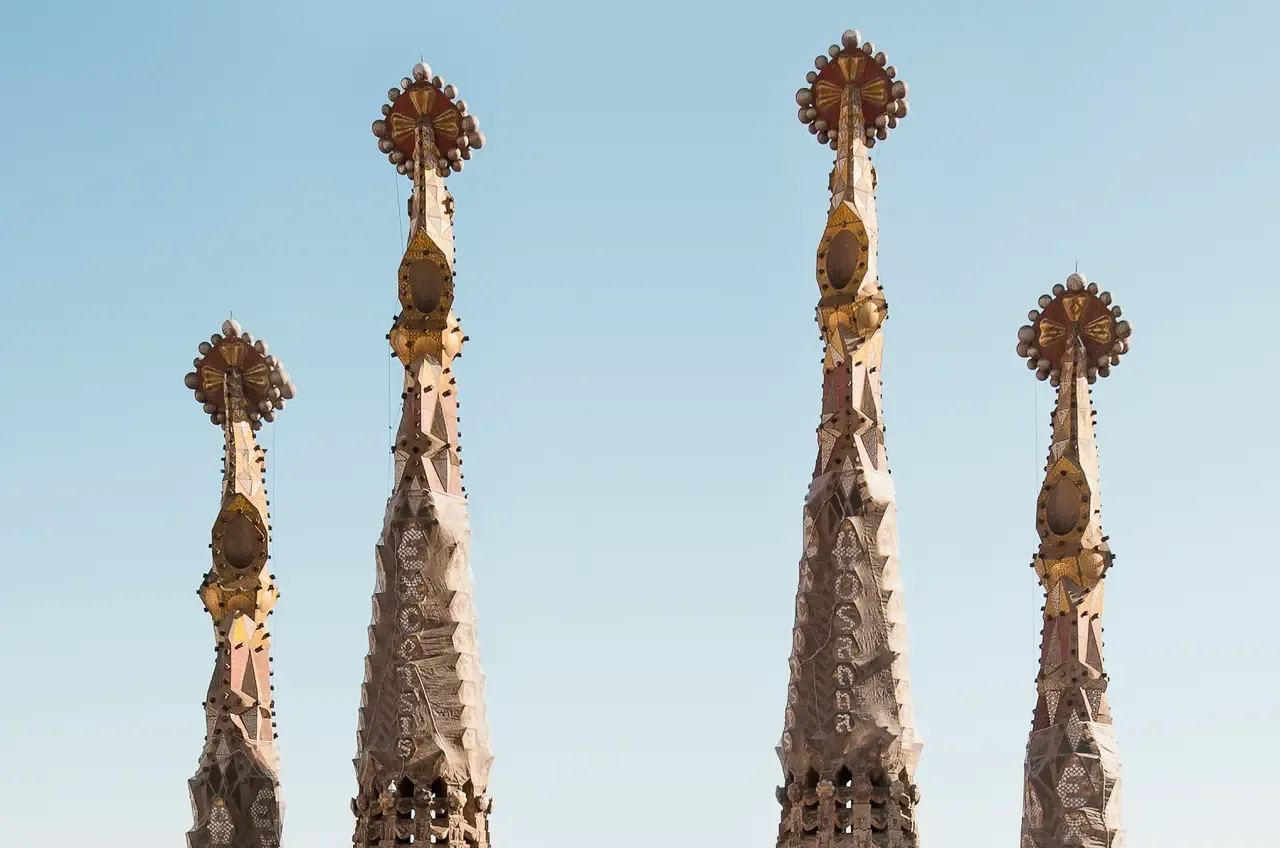
Bell towers
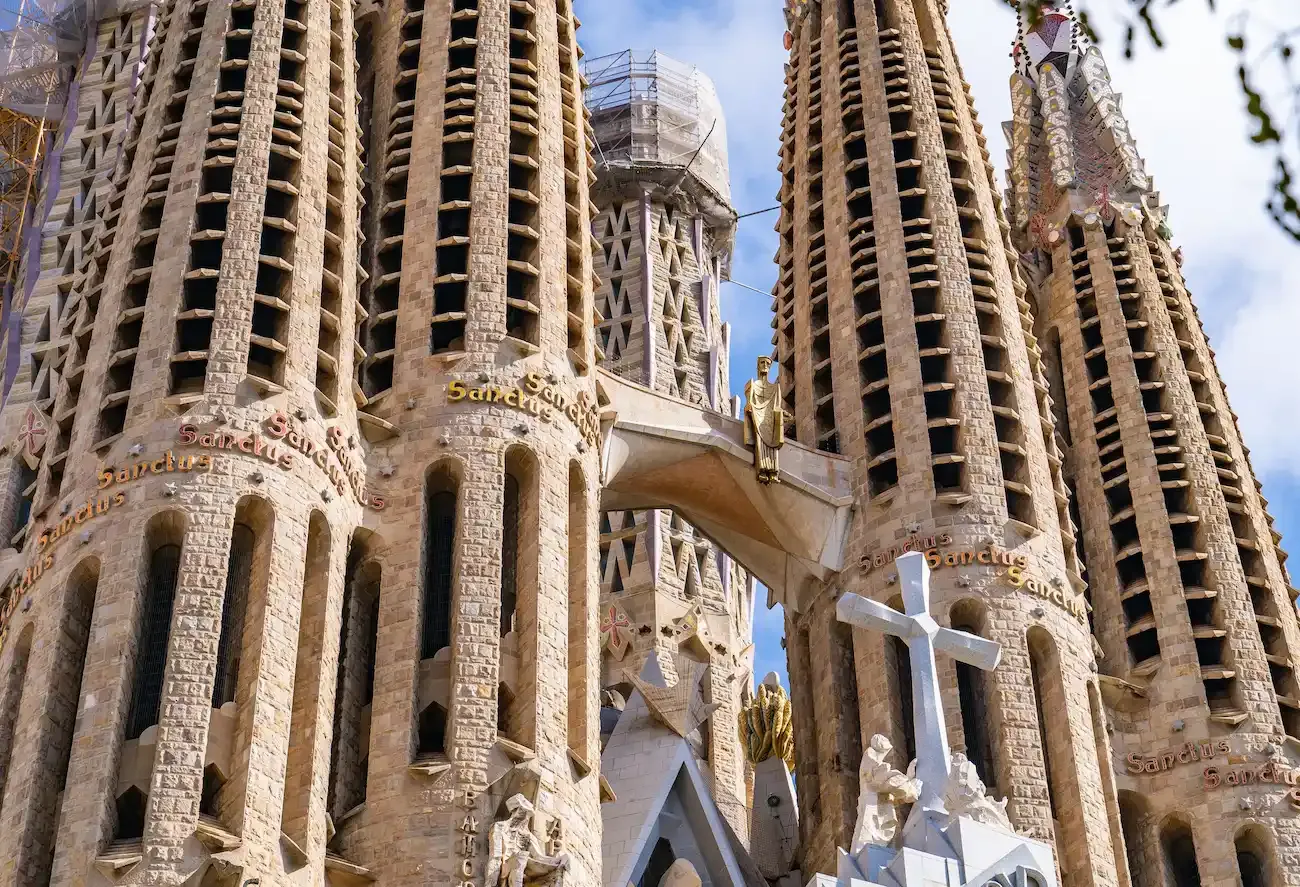
Several bell towers already crown the Sagrada Familia and stand over the Barcelona skyline. Gaudí designed each facade to carry four towers, twelve in all for the Apostles, within a full plan of 18. The central Tower of Jesus Christ is designed to reach 172.5 meters, a height set to make it the tallest church tower in the world once complete. With a tower ticket, visitors ride an elevator up the Nativity or Passion towers for wide city views and close looks at the ceramic mosaics and fruit-topped pinnacles. The towers work as giant belfries built to hold tubular bells that will ring through the surrounding streets. The descent is a narrow spiral staircase of more than 300 steps, and the tower circuit adds about 45 minutes.
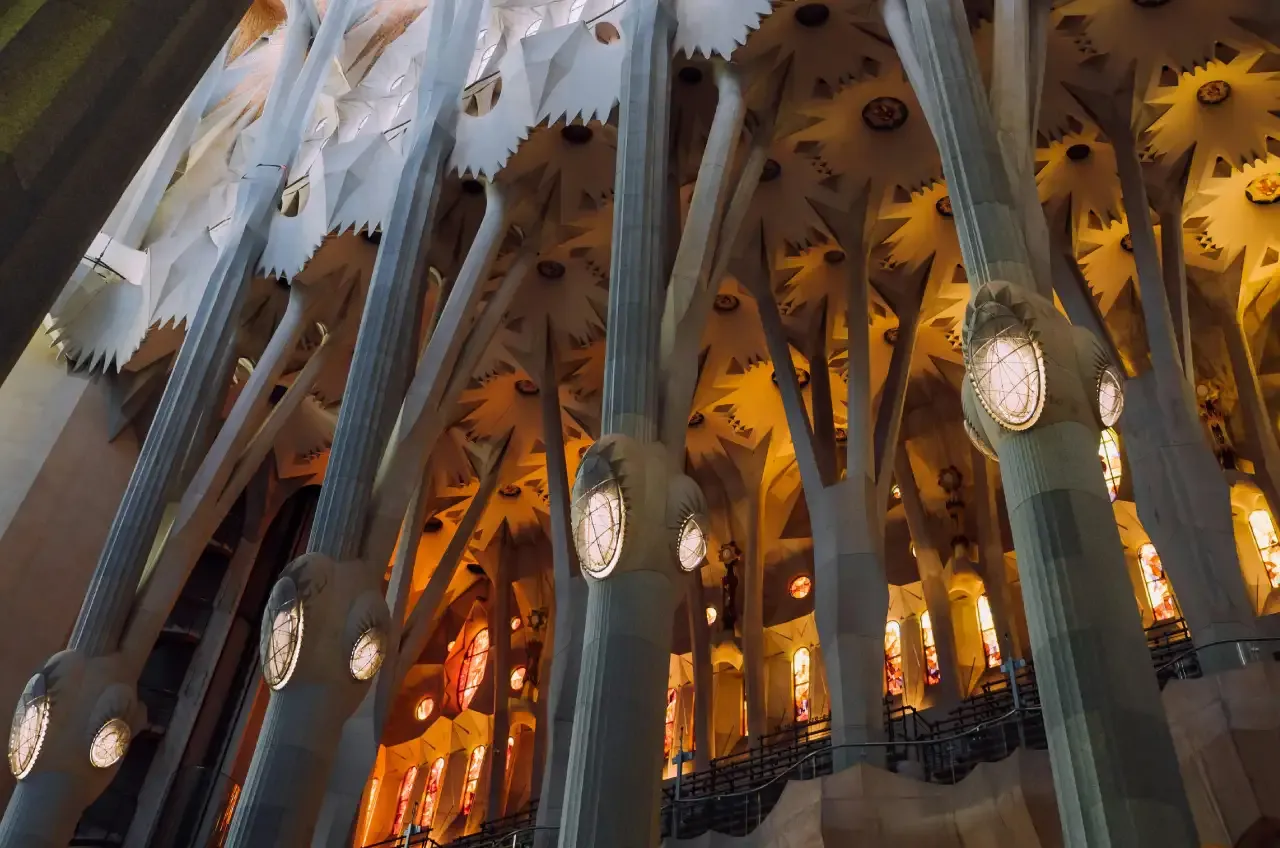
Tree-like columns
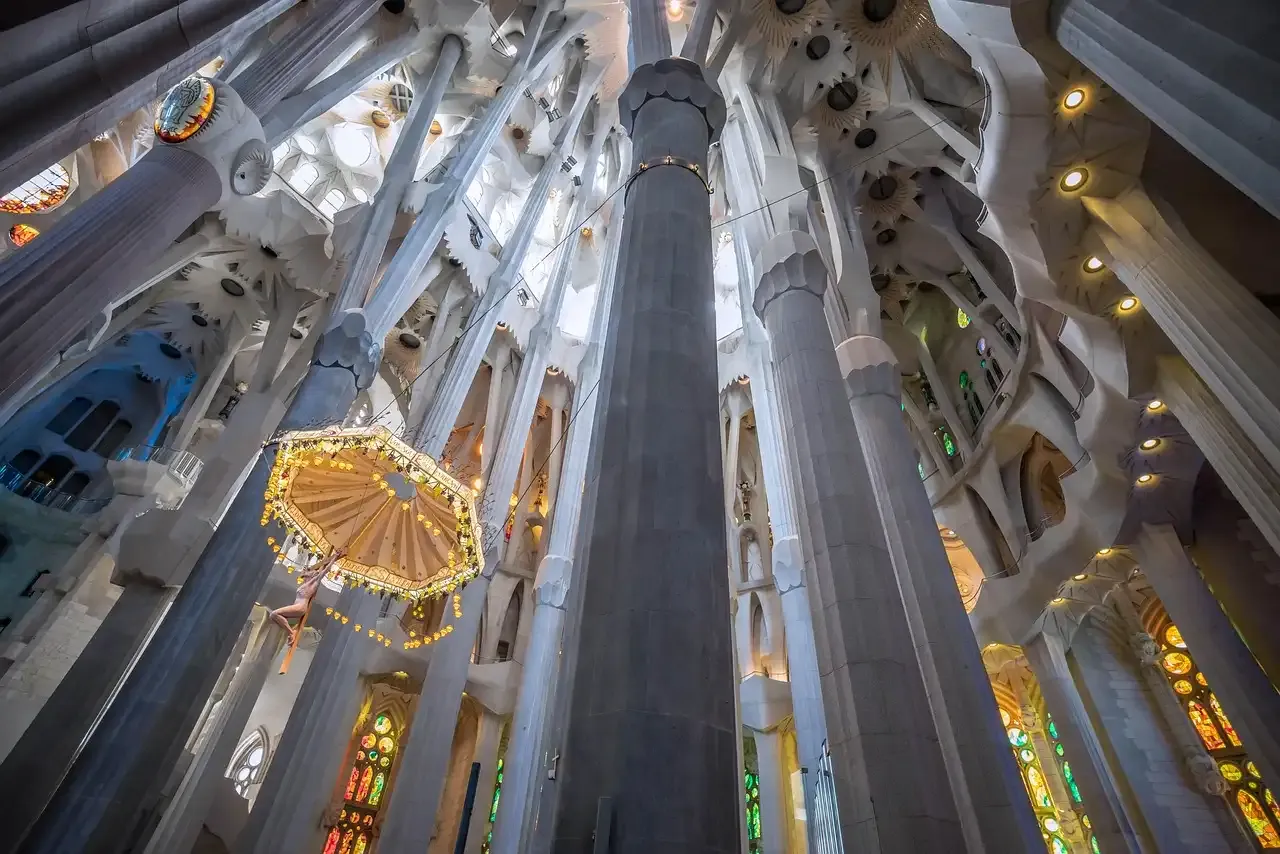
Inside the nave, the columns branch upward like the trunks of a forest, a system Gaudí devised to carry the weight of the roof straight into the ground without external flying buttresses. He drew the branching angles from how trees channel load from crown to root, then set that geometry into stone. The columns use four stone types matched to the load each one carries, so dense red porphyry forms the four central pillars beneath the main towers, basalt the columns around the crossing, granite those of the central nave and apse, and softer Montjuïc sandstone the side naves. These stone trunks give the nave a rhythm that rises toward a canopy-like ceiling. A slow walk among the columns takes about 15 minutes.
Vaults and ceilings
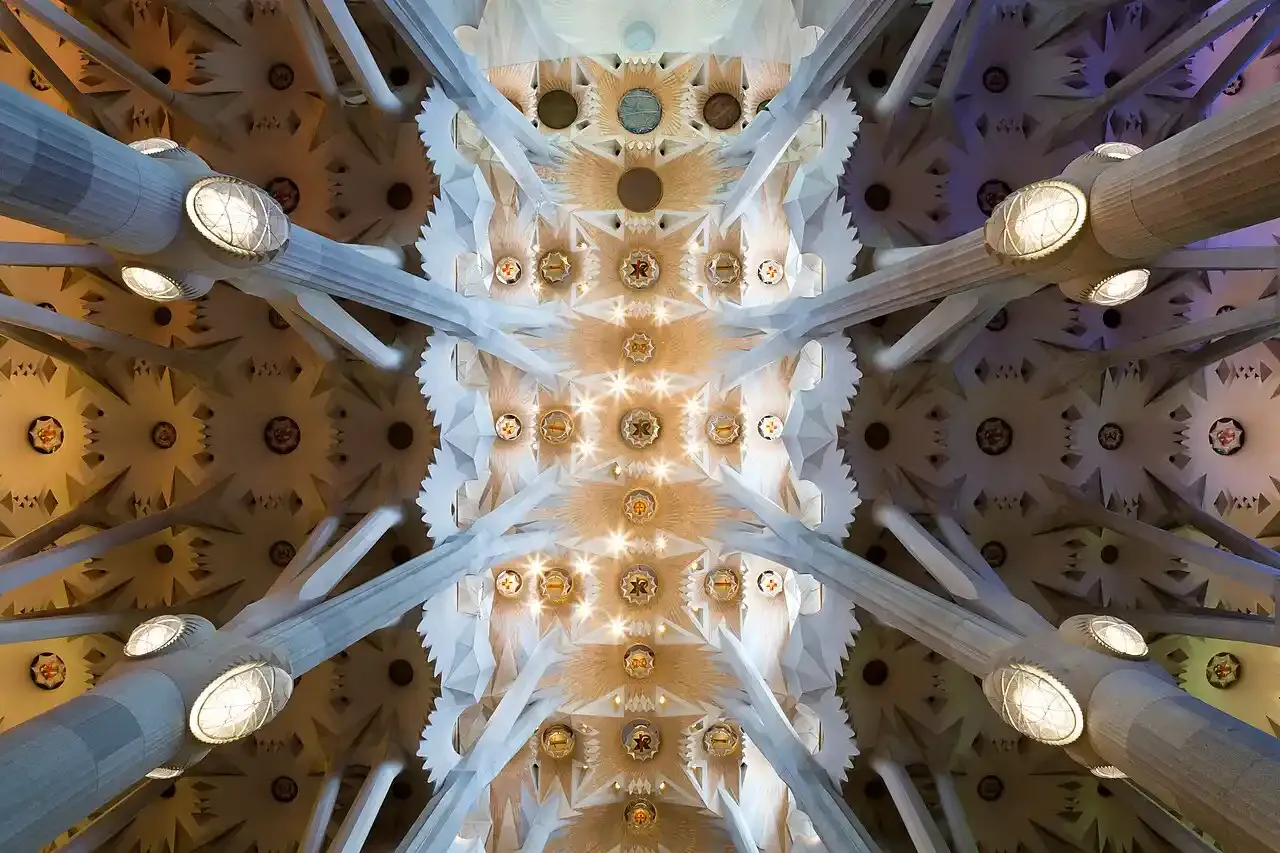
Vaults and ceilings
The ceiling of the basilica is a run of hyperboloid vaults that lock into the branching columns, and small circular openings let daylight through so the surface reads like sunbeams breaking a forest canopy. From the nave floor, the geometric patterns show where these curved shapes intersect. The vaults reach up to 45 meters in the central nave, held aloft by the column system rather than thick masonry walls, which keeps the interior open. Gold and green ceramic tiles set into the vaults add quiet color overhead. Because the ceiling reads best from the nave floor, a few minutes with the head tilted back covers it, about 10 minutes across the space.
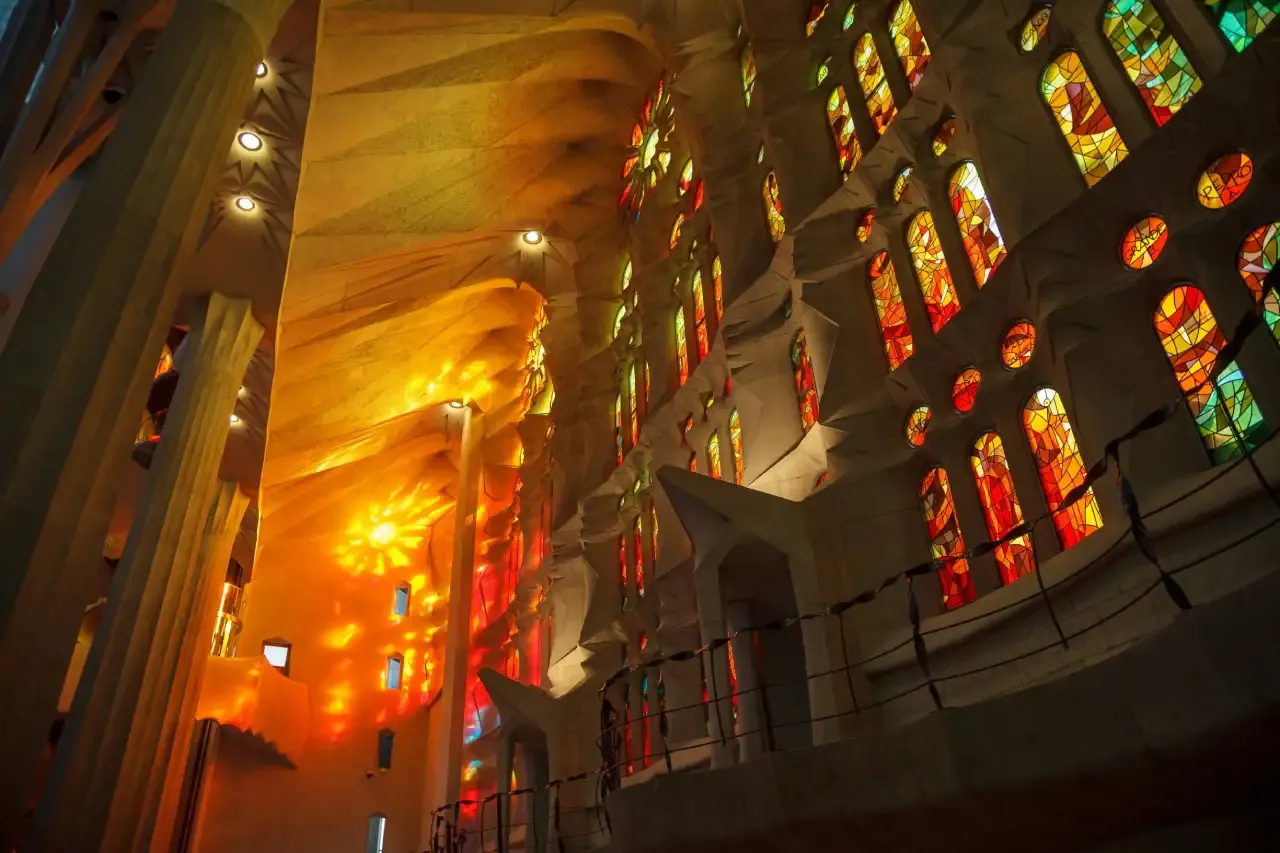
Stained glass windows
The stained glass sets the mood of the interior through a calculated use of light and color. Joan Vila-Grau designed more than 8,500 square meters of glass in a deliberate chromatic order, setting cool blues and greens on the Nativity side and warm reds and oranges on the Passion side, a project begun in 1999. As the sun crosses the sky, the panels throw shifting patterns across the stone floor, the eastern glass catching the morning and the western glass the afternoon. The windows carry abstract shapes rather than pictorial scenes, which keeps the nave bright with little artificial light. Moving through the nave to watch the color change takes about 15 minutes.
Crypt
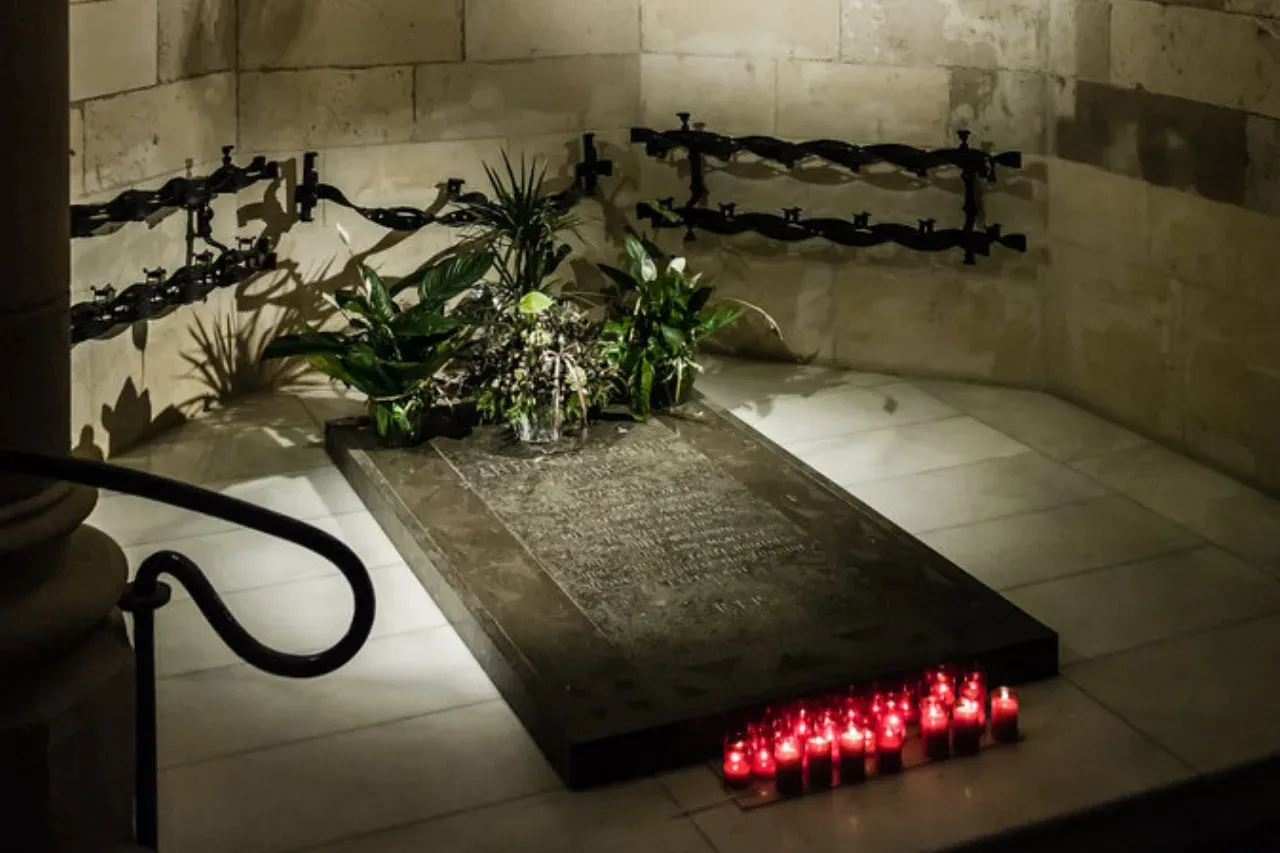
Crypt
The crypt is the oldest completed part of the church and holds the tomb of Antoni Gaudí. Built between 1882 and 1891 beneath the apse, this semicircular space has seven chapels, a mosaic floor, and the Neo-Gothic character that preceded Gaudí's later naturalistic work. Large windows draw daylight into the underground chamber, lighting the burial place of the architect alongside his patron, the bookseller Josep Maria Bocabella. An active chapel since 1885, the crypt still holds regular services and stays quiet and candlelit, a marked change from the nave above. A calm pause here takes around 10 to 15 minutes.
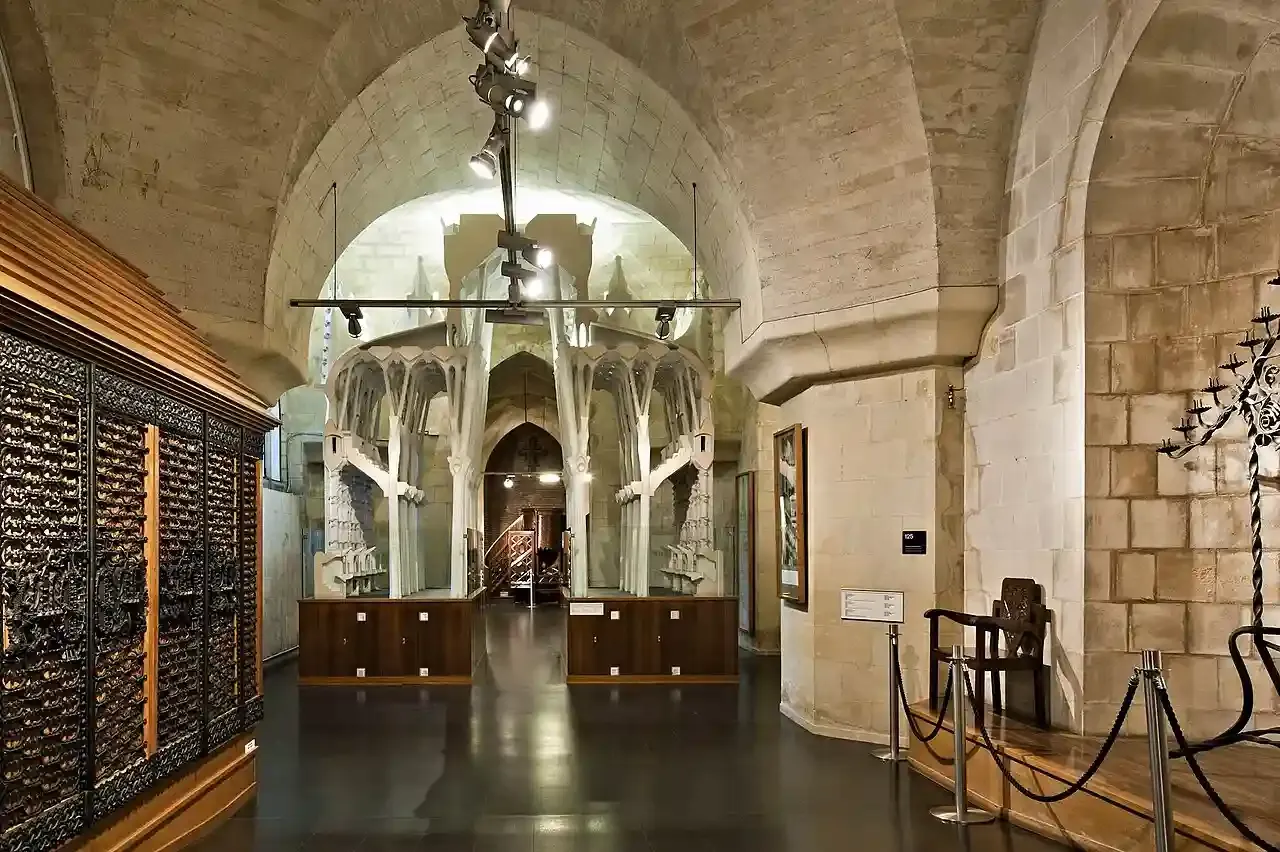
Sagrada Familia Museum
The onsite museum, set in the basement, traces the history and technical evolution of the basilica. Its cases hold the original drawings, photographs, and scale models Gaudí used to communicate his vision, and a working area lets visitors watch specialists shape new models in the modeling workshop. The displays follow the leap from 19th-century craft to the 3D printing and digital design that now guide construction, while the inverted string models on show explain how Gaudí calculated the tension and weight of his arches. The museum gives the context that makes the engineering in the main church legible. A thorough look through the exhibits takes about 25 minutes.
Museum shop
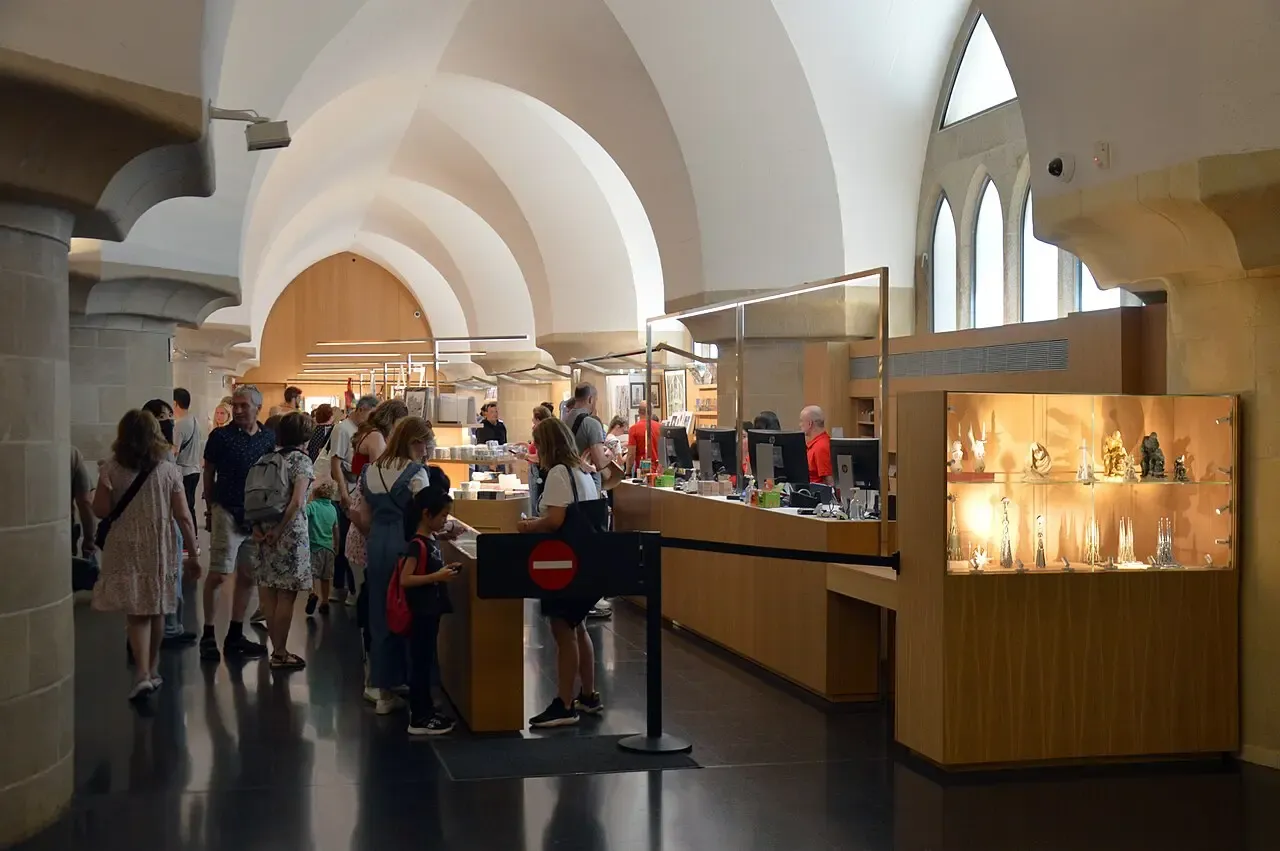
Museum shop
The museum shop marks the final stop for visitors finishing their tour of the basilica. Set within the architectural complex, it stocks items drawn from Gaudí's geometric patterns and naturalistic forms, including books, architectural models, and jewelry that echo the textures of the stone and the colors of the stained glass. The shelves also carry educational material on the construction history and the craft techniques used across the facades. Sales proceeds feed the building fund for the remaining towers, so a purchase supports the ongoing work. Browsing the official merchandise before leaving the grounds takes around 10 minutes.
Tips for visiting Sagrada Familia
A short list of practical habits smooths a Sagrada Familia visit. The most useful are:
- Booking online in advance and choosing a fixed entry slot matters most, since morning times sell out fastest and staff turn away anyone arriving outside their slot.
- The 09:00 weekday opening, best on Tuesday to Thursday, meets the smallest crowds, while the 12:00 to 15:00 window and Sunday mornings stay busiest.
- Light shifts through the day, as mornings bring cool blue and green tones through the Nativity glass and afternoons flood the nave with warm amber from the Passion side.
- A place of worship calls for covered shoulders and clothing to at least mid-thigh, and a packed scarf works as a quick shoulder cover.
- Closed shoes suit the tower climb, and large bags belong off-site, since the only lockers on the grounds serve tower climbers.
- Visitors should allow 1.5 to 2 hours for the basilica and museum, or close to 3 hours with the towers and the included audio guide, and reach the entrance at least 45 minutes before closing.