
Inside the Barcelona Cathedral
Stepping inside Barcelona Cathedral reveals centuries of Catalan Gothic architecture and art. Located in the Gothic Quarter, this cathedral houses chapels, stone carvings, and relics within its walls. Visitors exploring inside Barcelona Cathedral discover a center of regional religious history and medieval craftsmanship.
What to see inside Barcelona Cathedral?
The interior of Barcelona Cathedral contains historical structural elements, artworks, and sacred spaces created between the 13th and 20th centuries.
Central Nave
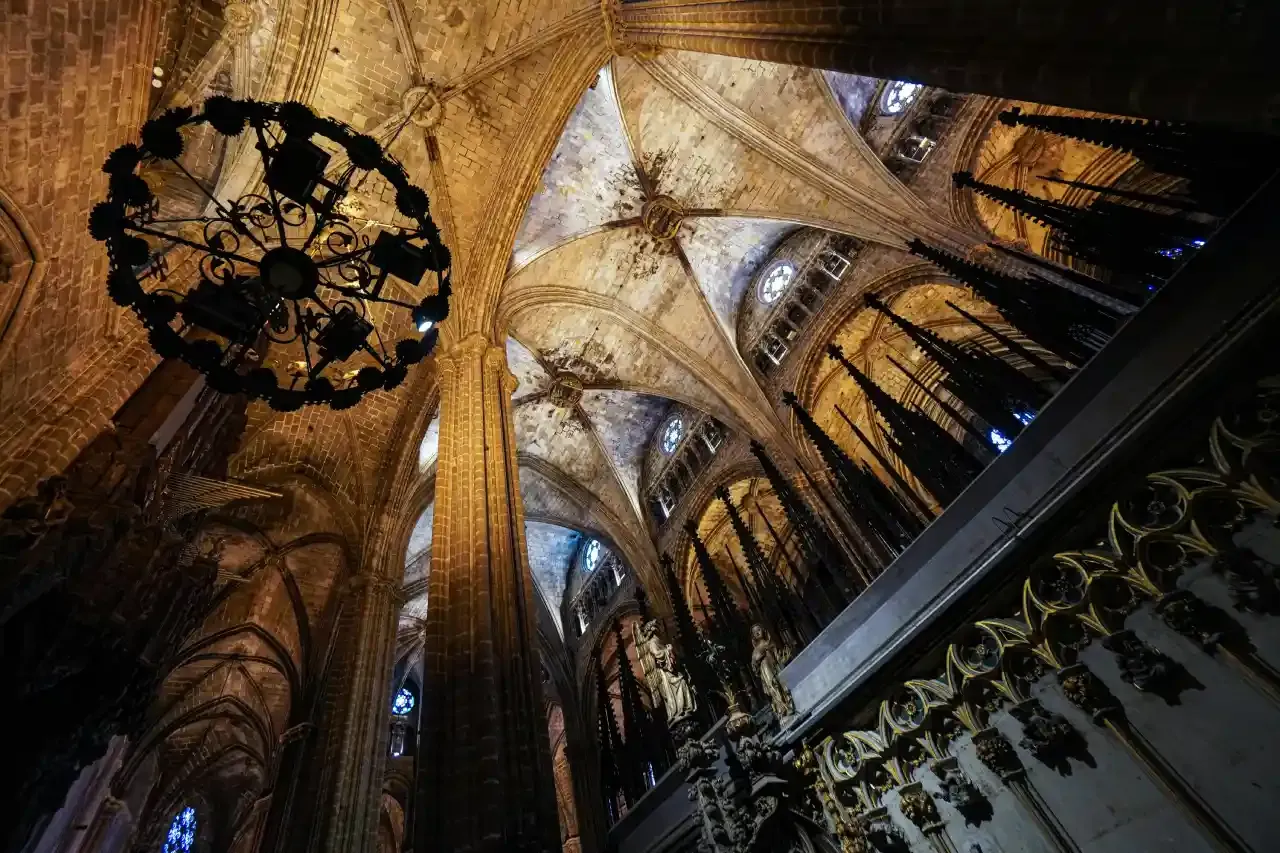
Central Nave
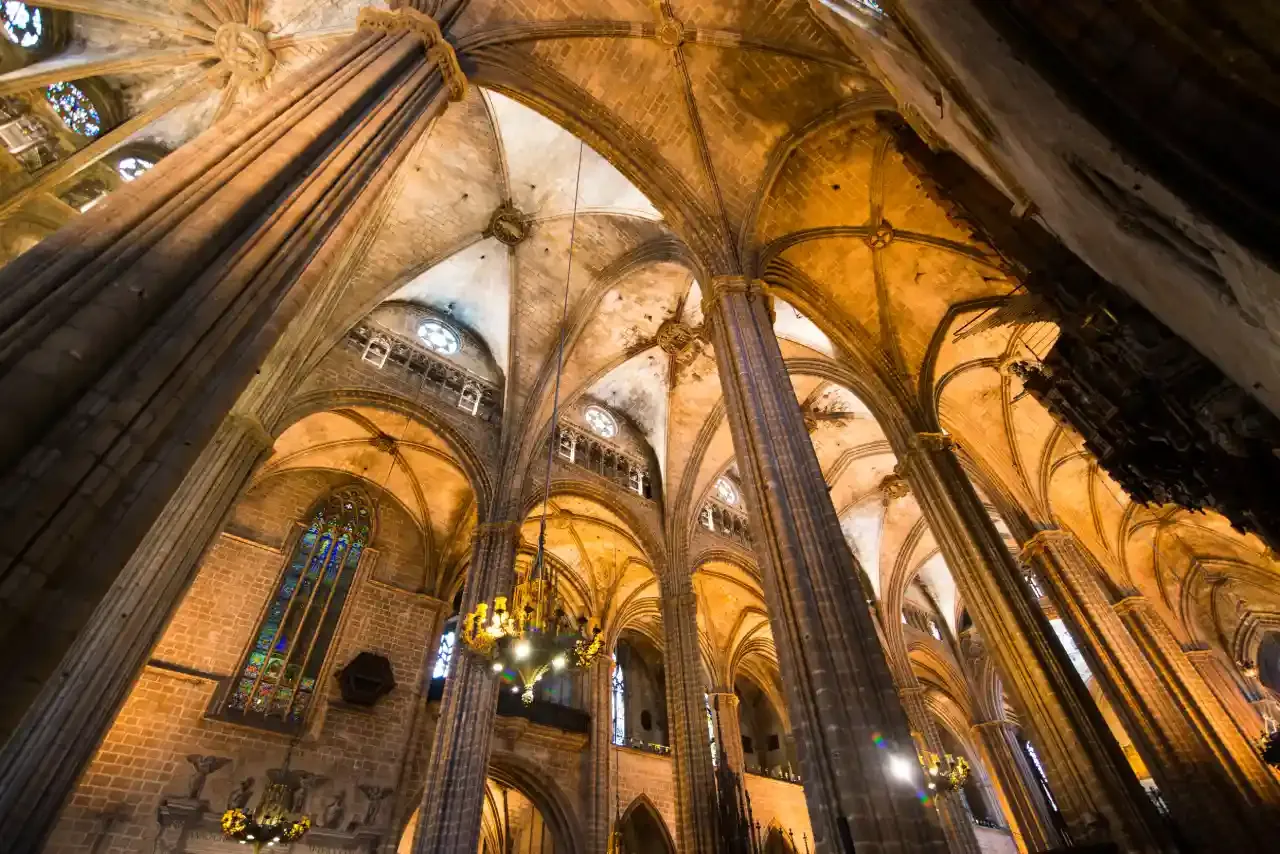
The central nave forms the primary axis of the building, measuring 90 meters in length and 26 meters in height. Vaulted ceilings supported by octagonal columns structure the central corridor. Stained glass windows, dating from the 14th to 20th centuries, filter light into the walkway. Lateral chapels dedicated to Catholic saints line both edges of the nave, housing altarpieces and historical panel paintings.
The Cathedral of Barcelona interior reflects a traditional Catalan Gothic plan through its wide single-nave layout. Visitors walking along the aisle observe stone keystones on the vaulting overhead, which depict scriptural scenes and medieval municipal heraldry from early Barcelona history.
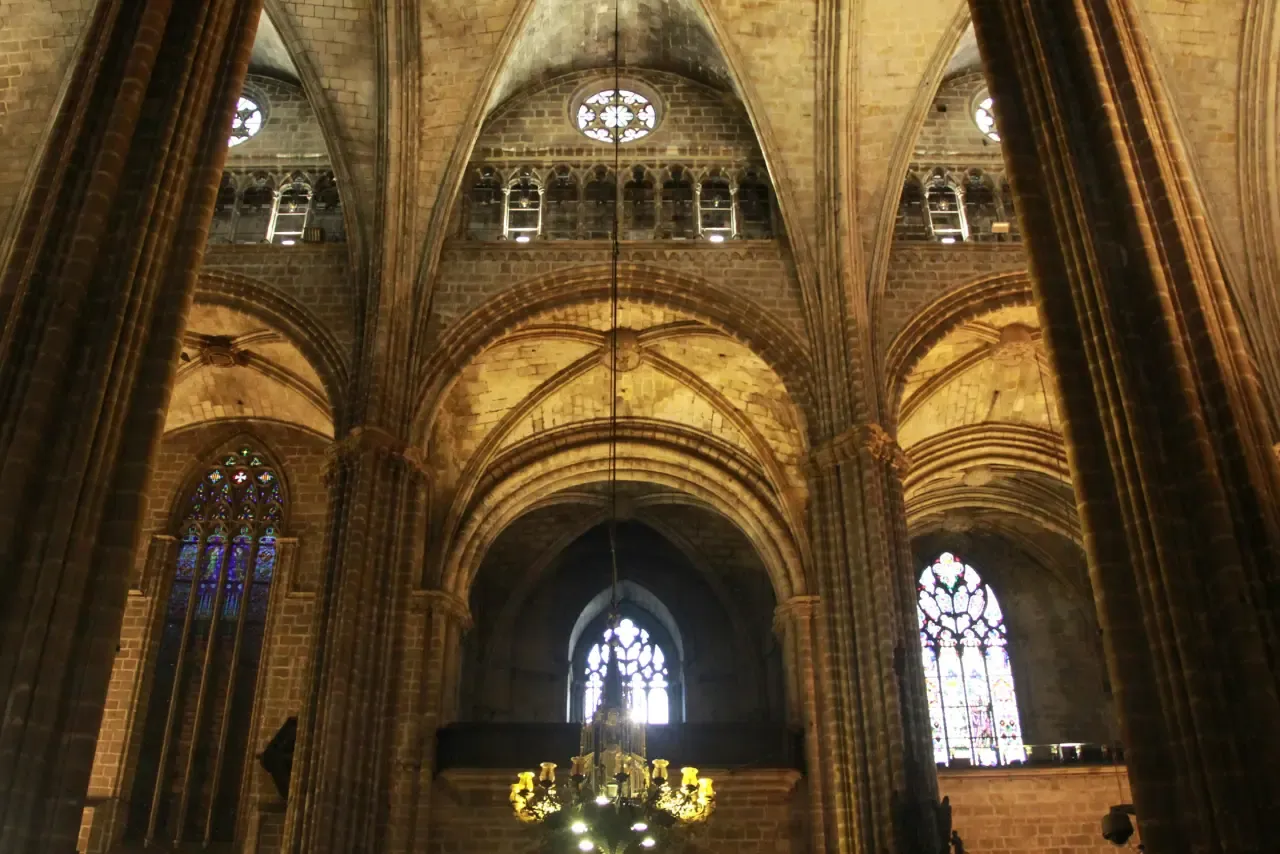
Tribunes and oculi
Above the side chapels, elevated stone galleries called tribunes extend along both sides of the central nave. These upper galleries feature arched openings overlooking the central sanctuary and main aisle below. Positioned directly above these tribunes are round stone windows known as oculi, which admit natural light into the upper sections of the nave. The oculi contain stained glass elements that cast colored light patterns across the ceiling vaults during daylight hours.
This structural combination of elevated tribunes and circular oculi supports the architectural design of Catalan Gothic construction while managing the distribution of daylight throughout the interior space of the building.
The choir and choir stalls
Located in the center of the nave, the choir stands as a primary artistic component within the sanctuary. Built during the 14th and 15th centuries, the wooden choir stalls feature relief carvings executed by sculptors Pere Sanglada and Michael Lochner.
The upper tier displays heraldic coats of arms representing knights of the Order of the Golden Fleece, painted by Joan de Borgonya for a 1519 chapter meeting convened by Emperor Charles V. Surrounding the wooden stalls stands a marble enclosure carved by Bartolomé Ordóñez, depicting the life and execution of Saint Eulalia. This stone wall separates the choir from the ambulatory aisles.
The apse and main altar
The apse forms the semi-circular eastern end of the church building, situated directly behind the main altar. Elevated above the surrounding floor level, the high altar rests on stone masonry and features a carved marble slab dating from the 6th century. Surrounding the apse, nine radiating chapels contain retables, tombs, and religious reliquaries.
Stained glass windows line the upper curved wall, directing morning light into the sanctuary area. Direct daylight illuminates the altar canopy and surrounding stone arches. The apse serves as the liturgical center of the building, anchoring the ground plan of the structure and connecting the surrounding ambulatory walkway with the main sanctuary space.
Suspended bronze crucifix
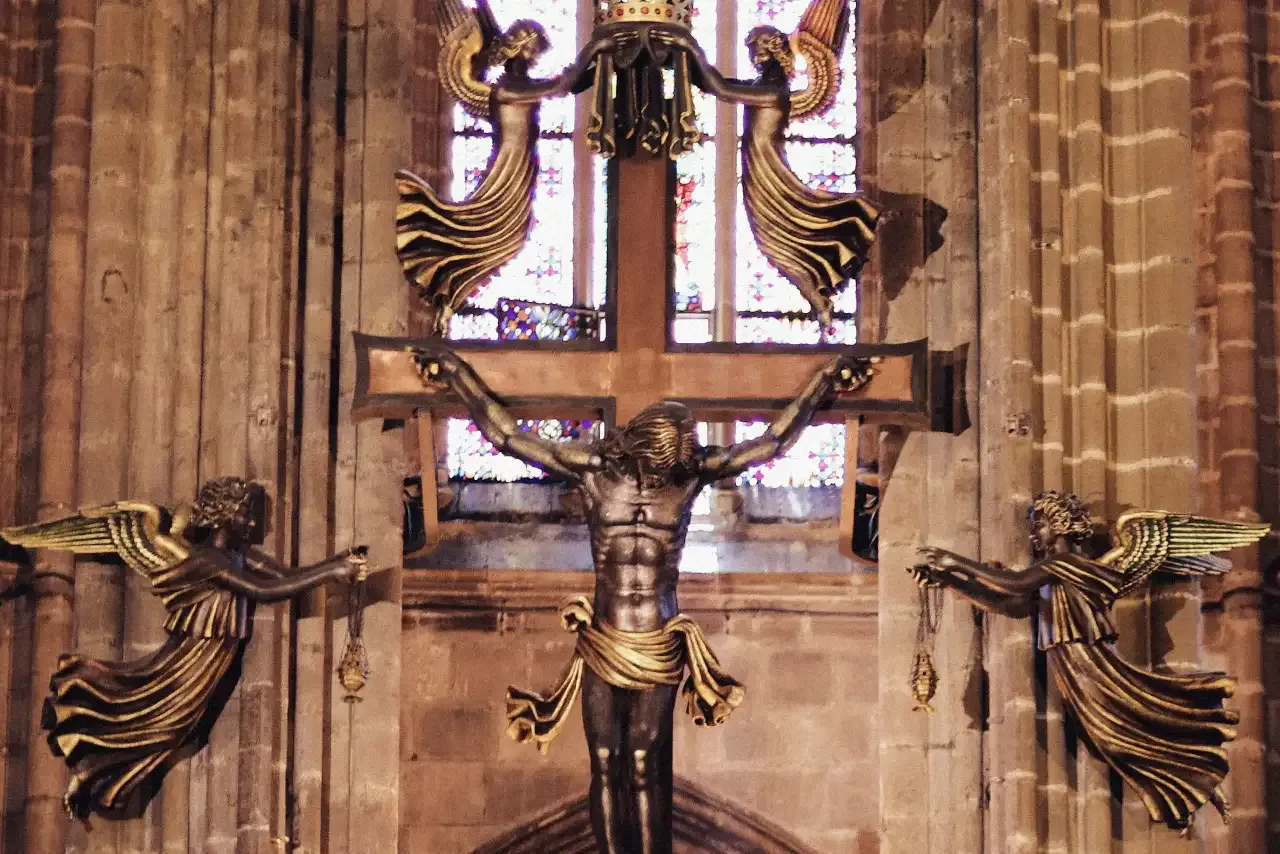
Suspended bronze crucifix
Suspended above the high altar is a bronze crucifix, serving as a focal element within the central sanctuary space. Positioned above the presbytery, this sculpted metal cross hangs directly over the main altar table. Nearby, functional metalwork includes a wrought iron lamp suspended near the sanctuary area, demonstrating traditional Catalan ironwork craftsmanship.
his illuminated lamp casts light across the stone floor and highlights details on the surrounding choir enclosure wall. Together, the suspended bronze crucifix and the wrought iron lamp represent the long tradition of metal fabrication integrated into the interior design and functional lighting system of the religious building.
Wrought iron lamp
Located near the presbytery area, a wrought iron lamp demonstrates traditional Catalan metalworking craftsmanship integrated into the cathedral interior. Suspended near the choir enclosure and high altar, this historic fixture provides localized illumination within the sanctuary space.
Blacksmiths shaped the iron into detailed structural elements, forming curved arms, scrollwork, and mounting brackets that support the central lighting apparatus. The light cast from the lamp illuminates the surrounding stone floor, highlighting decorative details carved into the adjacent walls and choir enclosure. Functioning as both a light source and an ornamental metalwork fixture, the wrought iron lamp reflects historical artisan traditions preserved inside the sanctuary.
The crypt of Saint Eulalia
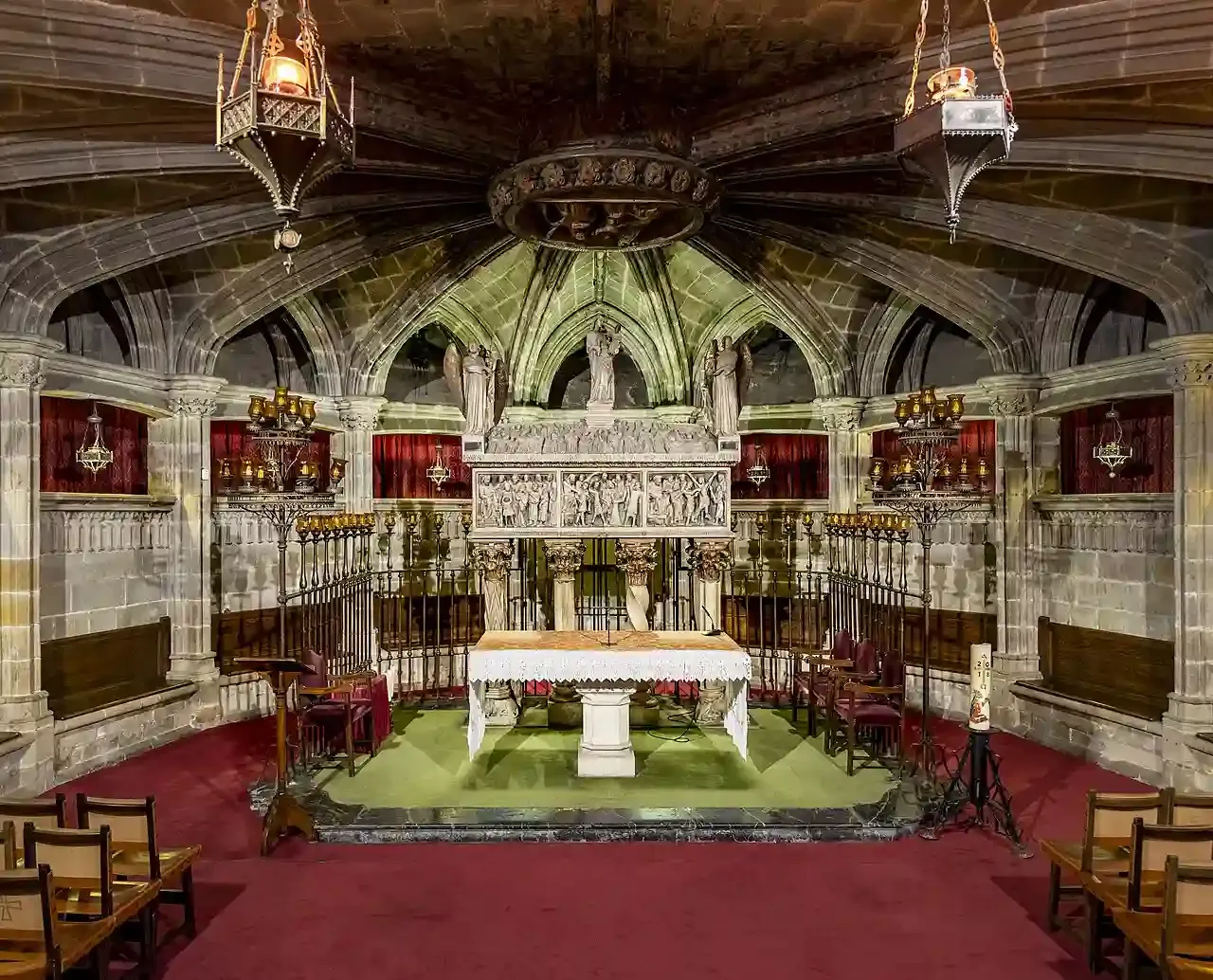
The crypt of Saint Eulalia
Located beneath the high altar, the subterranean crypt contains the remains of Saint Eulalia, co-patron saint of Barcelona. A stone staircase positioned in front of the main sanctuary descends into this vaulted room constructed in the early 14th century.
At the center of the crypt stands an alabaster sarcophagus sculpted by Italian artists, depicting scenes from the trial and execution of the saint. Her remains rest inside this tomb, which is supported by four carved marble columns. Interior lighting illuminates the stone walls, making the crypt a key location for visitors and pilgrims exploring inside Barcelona Cathedral who seek to view regional religious heritage.
Photo: “Barcelona Cathedral Interior - Crypt of Santa Eulalia” by Archaeodontosaurus.
The cloister, fountain, and courtyard area
Adjacent to the main basilica lies the 14th-century Gothic cloister, accessible through internal doors along the side aisles. This open-air courtyard contains vaulted walkways, palm trees, and a central garden surrounding the Fountain of Saint George.
A stone pond within the cloister houses 13 white geese, representing the age of Saint Eulalia at her death and the thirteen tortures recorded in her historical narrative. Surrounding the courtyard are several side chapels and the Cathedral Museum, which displays historical paintings, tapestries, and liturgical metal artifacts. The courtyard fountain area connects the interior halls with the garden spaces enclosed within the outer perimeter walls.
Architecture of Barcelona Cathedral
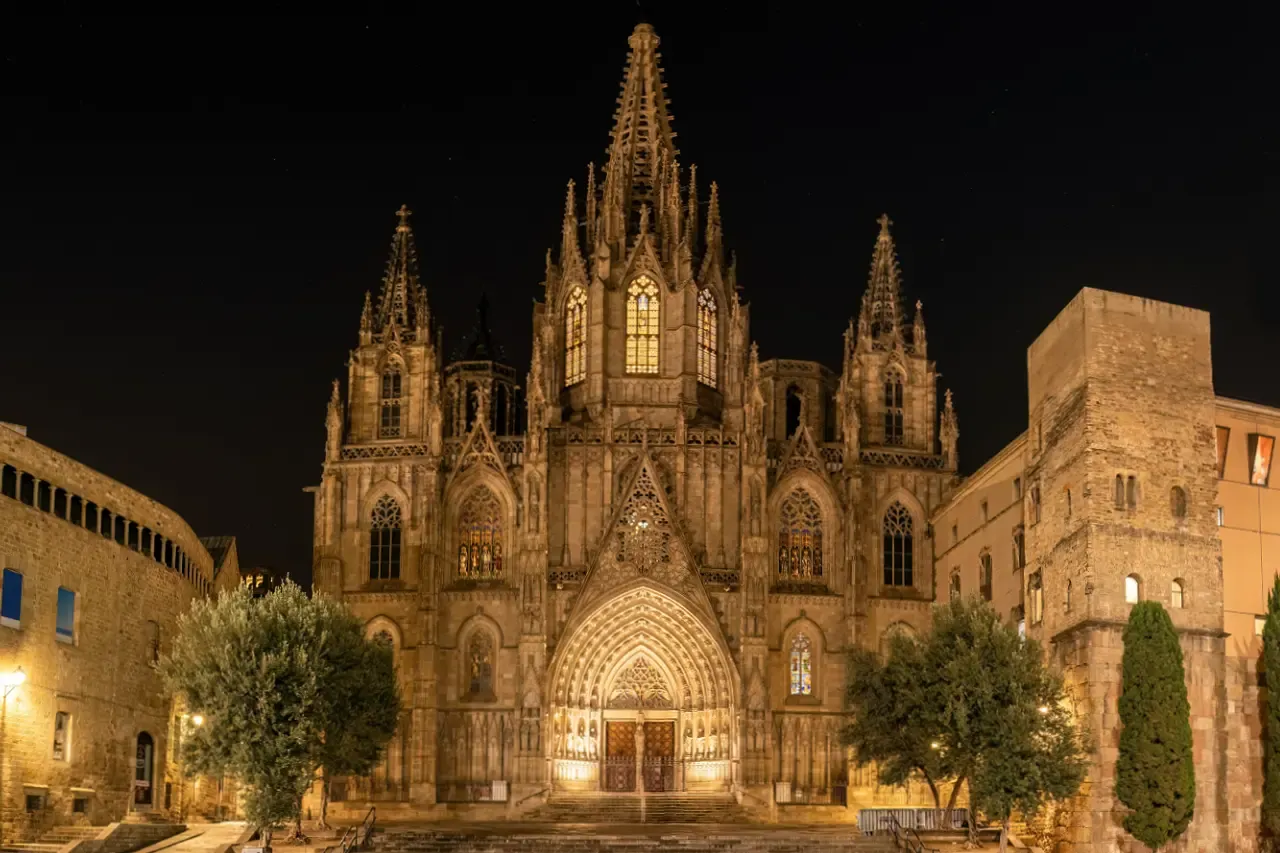
The Cathedral of the Holy Cross and Saint Eulalia showcases Catalan Gothic architecture built over several centuries. Construction began in 1298 on top of a Romanesque basilica and early Christian baptistery.
Interior architecture
The interior architecture follows the Catalan Gothic style, which emphasizes spatial width and structural unity throughout the sanctuary. Rather than emphasizing extreme vertical height, this design uses three naves of similar elevation to create a unified hall layout. Octagonal stone columns extend upward to support rib-vaulted ceilings, transferring structural weight directly toward external buttresses rather than interior supports.
This structural arrangement permits wide central spans and creates space for lateral chapels positioned between wall buttresses. Stained glass oculi and elevated side galleries admit natural light into the upper vaulting, illuminating the stone surfaces while maintaining a low light level characteristic of regional medieval construction.
Who is buried at Barcelona Cathedral?
Several historical figures and religious leaders are buried inside the cathedral. The crypt beneath the main altar holds the remains of Saint Eulalia, co-patron saint of the city. In side chapels lie Count Ramon Berenguer I of Barcelona and his wife, Countess Almodis de la Marche.
Bishop Berenguer de Palou rests in the chapel of Saint Lucy, while Saint Raymond of Penyafort lies buried along the nave. Furthermore, Saint Olegarius rests in the Chapel of the Blessed Sacrament. Royal tombs also contain King Alfonso III of Aragon, Queen Constance of Sicily, and Queen Sibylla of Fortià.
Can I go inside the Barcelona Cathedral?
Yes, visitors can go inside the cathedral during designated visiting hours. The cathedral opens daily for religious services and cultural tourist visits. Morning and evening hours reserve time for prayer, during which certain areas remain restricted to sightseers.
During cultural visit hours, purchasing a Barcelona Cathedral entry ticket provides access to the central nave, side chapels, choir stalls, subterranean crypt, and open cloister. Visitors can purchase tickets online in advance or at the ticket counter near the main portal. Audio guides are available with admission to explain historical and structural features during the tour.
Is it worth going inside Barcelona Cathedral?
Yes, Barcelona Cathedral offers direct access to the historical center of Catalonia. While many tourists prioritize Modernist structures such as Sagrada Familia, this church represents the core of medieval history in the city.
Among major Barcelona attractions, the cathedral stands out due to its medieval art, carved wooden choir stalls, and open-air cloister. Accessing the roof provides clear views over the streets of the Gothic Quarter. Furthermore, visiting Barcelona Cathedral allows individuals to examine 14th-century Catalan Gothic construction, stone masonry, and historical collections preserved in the side chapels and museum.
Observing Barcelona Cathedral at night showcases the illuminated exterior facade, while a daytime interior tour uncovers the structural heritage of the site. The combination of religious history, stone architecture, and city views makes an interior tour a valuable addition to an itinerary.
Book your tickets to visit Barcelona Cathedral
FAQs about the interior of Barcelona Cathedral
More information about Barcelona Cathedral
Opening hours
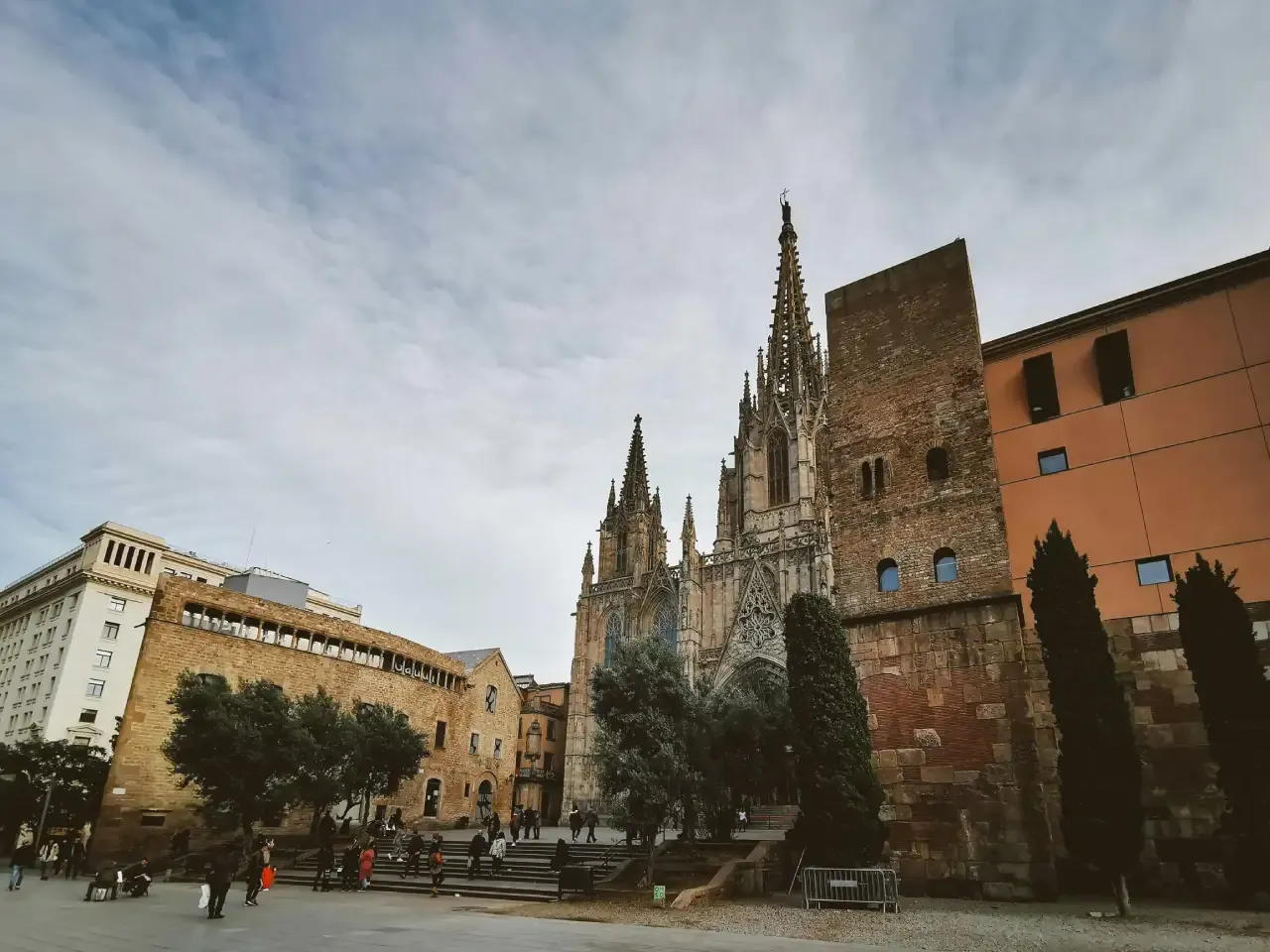
Understanding the Barcelona Cathedral opening hours allows visitors to plan around daily worship services and changing tourist access times.
How to get there
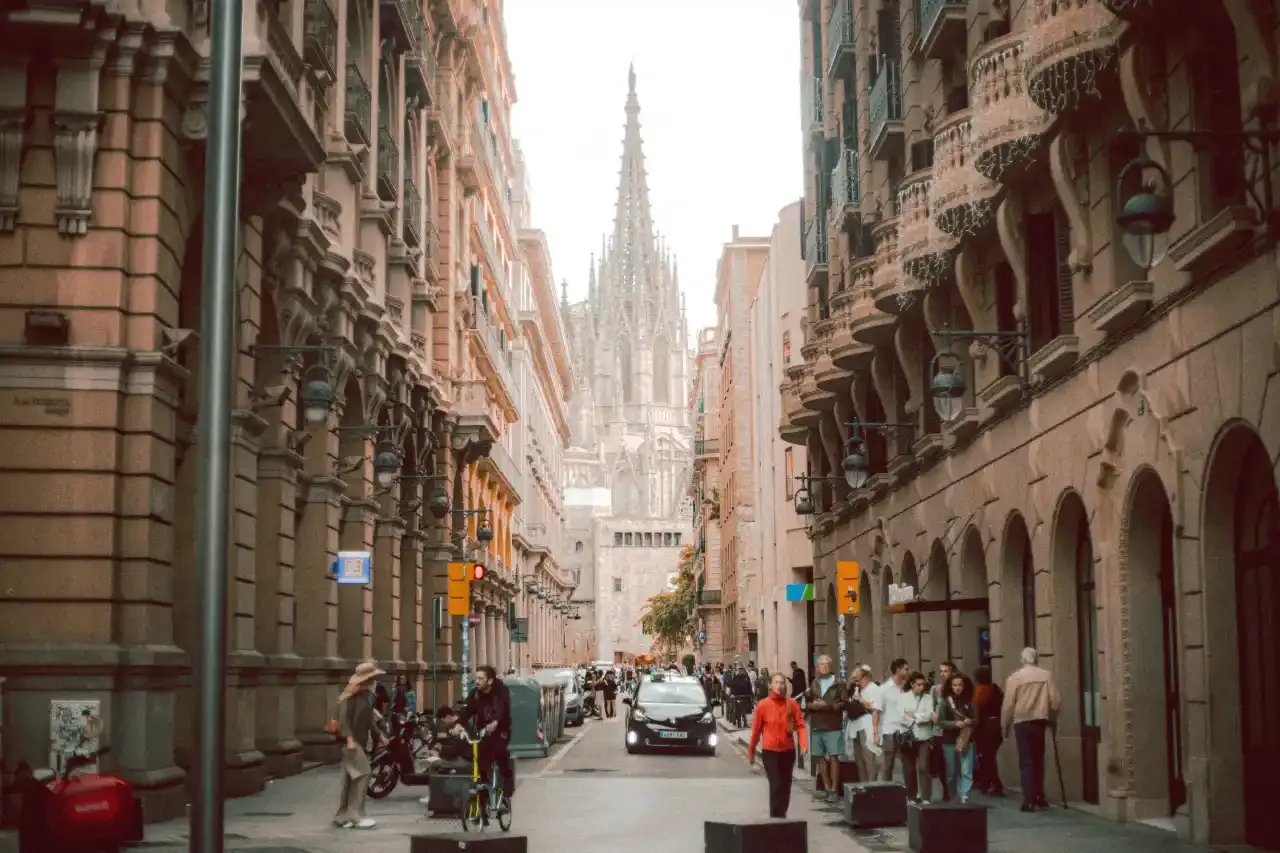
Knowing how to get to the Barcelona Cathedral ensures a smooth arrival through the narrow streets of the Gothic Quarter.
Dress code
Reviewing the dress code for Barcelona Cathedral prevents entry refusals at security checkpoints at the main entrance.